
What is Learning and Development?
What is Learning and Development?
Learning and development (L&D) is a strategic organizational function dedicated to empowering employee growth by enhancing their knowledge, skills, and capabilities. Ultimately, the primary goal of L&D is to drive overall business performance, productivity, and employee retention through continuous professional education.
Often recognized as a core pillar of human resources management or talent development (TD), L&D encompasses all professional development, training programs, and upskilling initiatives an organization provides to its workforce.
Overview
Skills for L&D Professionals
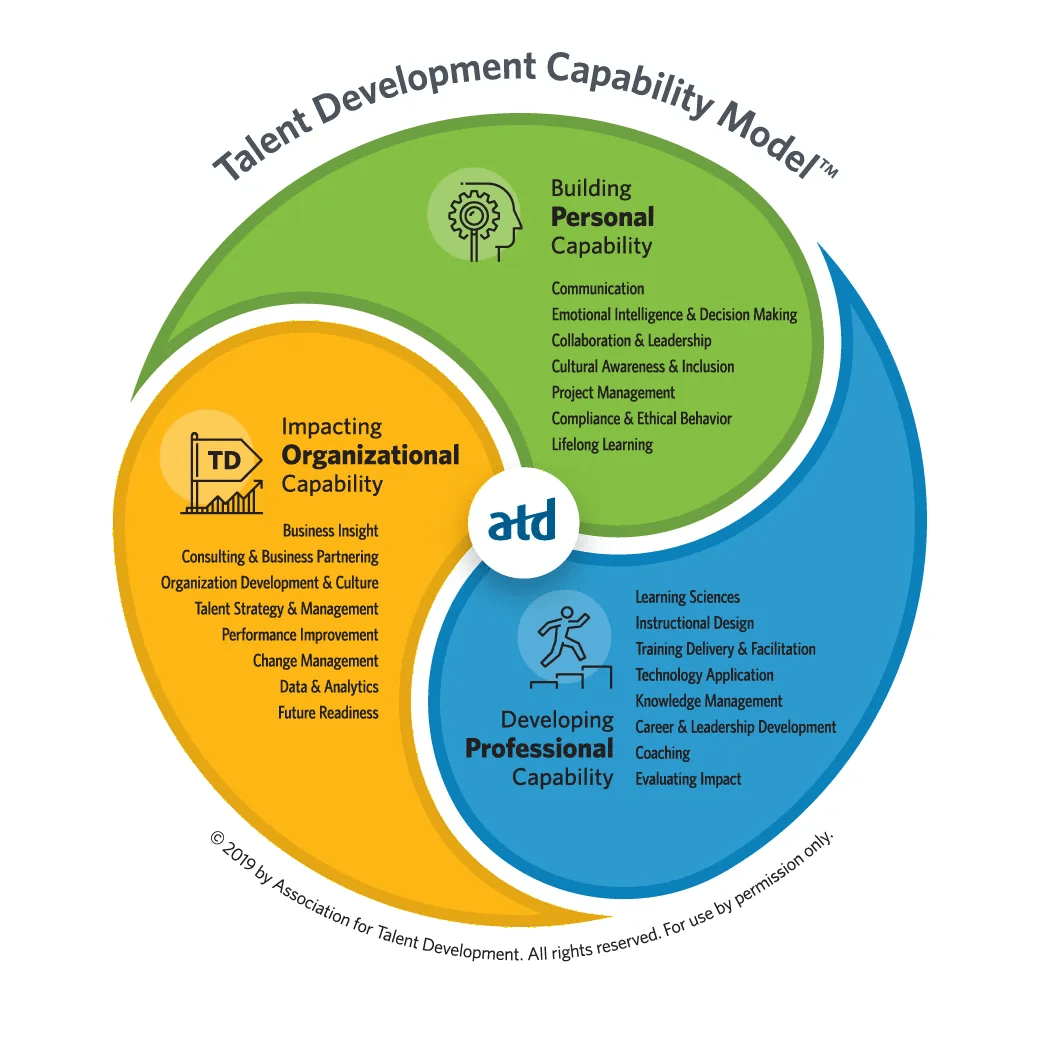
Research found that the knowledge, skills, and attitudes (KSAs) of effective talent development professionals, at every level of their career, fell into three major domains of practice.
Creating an L&D Strategy
An L&D strategy should align with the organization’s business strategy and goals, aiming to develop the workforce’s capabilities and drive business results.
Jobs for L&D Professionals
There are many different roles that make up a learning and development team or fall under the umbrella of an L&D professional.
What L&D Does Right
The role of the L&D function has evolved to meet the demands of digital transformation and a modern workforce.
Learning and Development Organizational Structures
Depending on the company's size and strategy, the learning and development function typically operates under one of three structural models:
Structure | Description |
Centralized | Operates as a single, independent department or sits directly under human resources (HR) to serve the entire enterprise |
Decentralized | Distributed directly throughout different business units or departments to address localized training needs |
Hybrid (Federated) | Combines centralized governance and core standards with decentralized execution tailored to specific business units |
Core L&D Initiatives and Programs
A comprehensive talent development strategy covers the entire employee lifecycle. Common initiatives managed by L&D teams include:
Onboarding and New Hire Programs: Integrating new employees and accelerating their time-to-productivity
Compliance Training: Delivering mandatory courses required by law, regulation, or policy
Skills Training & Upskilling: Developing technical, functional, and soft skills to meet current and future demands
Leadership Development: Cultivating future managers and executives through targeted leadership tracks
Career Development & Talent Strategy: Mapping out long-term career pathways and succession planning to retain top talent
Skills for Learning and Development Professionals
To maximize impact, modern learning and development professionals must cultivate a diverse blend of interpersonal, technical, and strategic skills. Backed by extensive research into the knowledge, skills, and attitudes (KSAs) required for success at every career level, ATD established the Talent Development Capability Model®. This framework organizes essential L&D skills into three core domains of practice:
Building Personal Capability: Rooted in interpersonal skills. This domain covers critical soft skills such as communication, emotional intelligence, collaboration, and cultural awareness.
Developing Professional Capability: Focused on the core mechanics of learning. This includes instructional design, training delivery, technology application, and learning evaluation.
Driving Organizational Capability: Aligned with business strategy. This domain affects enterprise-wide success through strategic talent management, organization development, change management, and data analytics.
L&D Professional Resources and Certifications
For practitioners seeking to expand their expertise, align with industry standards, or validate their skills, ATD education provides the benchmark resources and credentials for the profession:
The TDBok™ Guide: Talent Development Body of Knowledge: The definitive, comprehensive collection of concepts, definitions, and methodologies shaping the L&D field.
Associate Professional in Talent Development (APTD®): A foundational credential for early-to-mid-career practitioners looking to validate their talent development capabilities.
Certified Professional in Talent Development (CPTD®): The premier certification for seasoned L&D leaders, demonstrating mastery of the full scope of talent development.
Creating a Learning and Development Strategy
An effective learning and development strategy is never one-size-fits-all, but successful frameworks share a common foundation: absolute alignment with corporate business goals. Rather than training for the sake of training, a modern L&D strategy closes skills gaps, maximizes employee performance, and adapts to organizational change.
In L&D’s Playbook for the Digital Age, Brandon Carson outlines 10 critical objectives for building an effective corporate training strategy. We can break these down into four core phases:
Phase 1: Establish the Foundation
Before diving into execution, define the ultimate purpose of your talent development function and ensure it aligns with corporate culture.
1. Mission: Establish a clear mission statement to guide daily decision making. This defines exactly what your team does and why your L&D function exists.
2. Vision: Craft an aspirational declaration of where your department is heading, ensuring it directly supports the overarching organization’s vision.
Phase 2: Conduct Strategic Analysis
Assess your internal landscape to identify immediate needs and future opportunities.
3. Assess the Business Landscape: Conduct a strategic needs analysis to identify critical focus areas, skills gaps, the impact of digital transformation, and the training needs perceived by leadership and employees.
4. Assess the Learning Team’s Capabilities: Audit your internal L&D team to identify existing expertise and pinpoint the skills you need to recruit or develop to accomplish your goals.
Phase 3: Optimize Processes and Infrastructure
Ensure your team has the operational workflows and tools required to deliver a high-quality learning experience.
5. Identify Processes to Add or Modify: Review existing operational processes (such as instructional design standards, content strategy, and development guidelines) and modify them to align with your new strategy.
6. Inventory Tools and Systems: Audit your learning technology stack. Ensure your team and learners have the necessary software for project management, collaboration, content creation, administration (LMS/LXP), quality assurance, and future readiness. For example, AI in learning development is a growing trend that will shape how L&D uses technology in the coming years.
Phase 4: Drive Employee Experience and Execution
Focus on holistic workforce growth, engagement, and continuous improvement.
7. Examine Employee Engagement Programs: Evaluate L&D’s role in the broader employee lifecycle, including recruiting, onboarding programs, career pathing, and feedback mechanisms.
8. Support Employee Wellbeing: Partner with the business to establish or support health and wellness programs that foster a healthy work environment.
9. Promote Lifelong Learning: Build a culture of continuous learning. Provide opportunities for personal development that improve employee retention and promotability.
10. Architect Short- and Long-Term Strategies: Balance immediate training needs with future growth. Secure visibility with business leaders, invest intentionally in your technology stack, create a shared language in learning and development, and establish a formal governance process to consistently re-evaluate your strategy.
Jobs for Learning and Development Professionals
The composition of a learning and development team depends heavily on organizational size. On lean or "department of one" teams, an L&D professional often wears multiple hats and spans several functions. In contrast, larger enterprise organizations typically feature highly specialized, clearly defined roles.
Whether operating individually or within a massive corporate university, the most common roles across the talent development landscape include:
1. Delivery and Instructional Design (Execution)
These practitioners are on the frontline of creating, building, and delivering learning experiences.
Trainers / Facilitators: Professionals who facilitate learning across traditional classrooms, virtual classrooms (VILT), one-on-one sessions, or on-the-job environments. Key priorities include mastering training delivery and facilitation skills.
Instructional Designers (IDs): Specialists who implement systematic methodologies rooted in learning science to design and develop content, curriculum, and experiential learning solutions. They produce presentation materials, participant guides, performance support tools, and evaluation frameworks to measure learning impact.
E-Learning Professionals: Digital specialists who build, develop, and manage structured courses delivered electronically. This includes managing online or computer-based learning, digital collaboration spaces, and rich media assets.
2. Management and Organizational Excellence (Strategy)
These roles bridge the gap between instructional execution and high-level corporate strategy.
L&D / Talent Development Managers: Leaders who oversee the day-to-day operations, people, and processes of the learning function to drive team performance and productivity.
OD / HR Professionals: Specialists focused on organization development (OD) and human resources who optimize talent, systems, and workplace culture. This role heavily relies on executive coaching, consulting, change management, and human performance improvement (HPI).
Coaches: Credentialed professionals who partner with individuals or teams to maximize their professional potential by establishing goals, leveraging strengths, and accelerating career development.
3. Executive and Enterprise Leadership (Governance)
These senior leaders align the entire talent development strategy with macro-level business objectives and corporate governance.
Talent Development Directors / Executives: Senior leaders who oversee a comprehensive talent development unit, often managing multiple functional teams and cross-departmental initiatives.
Chief Talent Development Officers (CTDO) / Chief Learning Officers (CLO): C-suite executives who champion the workforce development strategy at the highest level of leadership, often reporting directly to the CEO.
What Learning and Development Does Right
Historically, learning and development functions operated primarily as event-based, curriculum-driven training departments focused on traditional, instructor-led classrooms. Because this legacy approach viewed development through a narrow lens, standalone training events often lacked a holistic strategy and failed to yield long-term behavior change or measurable business outcomes.
Today, the modern L&D function has evolved into a strategic business driver designed to meet the demands of digital transformation and a dynamic, hybrid workforce.
5 Critical Competencies for Modern L&D Teams
Beyond a foundational understanding of learning sciences, workplace growth and development expert Julie Winkle Giulioni highlights five advanced skills that successful talent development teams must cultivate to adapt to changing organizational needs:
Agility: The capacity to continually adapt, embrace rapid prototyping, experiment with new methodologies, and pivot as business requirements shift.
Business Acumen: Deep understanding of the organization's financial drivers, market positioning, and operational challenges. Also known as business insight, this is a core competency within the ATD Talent Development Capability Model®.
Content Curation: The ability to cut through digital noise by filtering, organizing, and delivering high-value, contextually relevant resources to learners exactly when they need them.
Design Thinking: A human-centered approach to problem-solving that prioritizes the user experience (UX), allowing L&D teams to co-create solutions with learners and deploy rapid pilots.
Learning Evaluation: The expertise to measure, analyze, and validate training effectiveness using data analytics, proving the tangible return on investment (ROI) to executive stakeholders.
Driving Performance and Lowering Costs
By mastering these modern disciplines, high-performing L&D teams shift from passive order-takers to proactive solution providers. They leverage modern learning tech stacks to facilitate both formal training and informal, on-demand microlearning.
Ultimately, utilizing data to create a continuous feedback loop allows organizations to:
Maximize workforce performance and productivity.
Accelerate internal innovation.
Substantially reduce redundant talent costs associated with external rehiring and reactive reskilling.
Benefits of Learning and Development for Employees and Businesses
A strategic investment in learning and development yields a powerful dual return, directly elevating the individual employee experience while simultaneously driving enterprise-wide business capability. When executed effectively, talent development bridges the gap between human potential and corporate performance.
For Employees: Growth, Engagement, and Purpose
For modern professionals, professional development is no longer just a workplace perk—it is a core career expectation. ATD research indicates that structured continuous learning provides profound professional and psychological benefits:
Accelerated Career Advancement: Providing defined training programs helps employees close immediate skill gaps and builds the competencies needed to transition into senior roles and leadership positions.
Boosted Confidence and Motivation: As employees master new knowledge, skills, and attitudes (KSAs), they experience a tangible confidence boost. This psychological empowerment motivates individuals to take ownership of their development, volunteer for new responsibilities, and innovate.
Clear Pathways to Promotion: Continuous learning transforms abstract career progression into visible pathways. According to Gallup and ATD insights, workers who feel supported in upskilling are eight times more likely to see a long-term career path within their current company.
A Deeper Sense of Purpose: When personal learning objectives align with the company's broader mission, employees develop a stronger connection to their work. This alignment makes them more than twice as likely to feel a sense of purpose and stay with their employer.
For Businesses: Retention, Agility, and Competitive Advantage
From an organizational perspective, the L&D function is a primary engine for building capability, protecting culture, and safeguarding the bottom line. Businesses that embed talent development into their corporate strategy achieve significant competitive advantages:
Enhanced Employee Retention: A lack of professional growth is consistently cited as a primary reason talent leaves an organization. Investing in internal development builds long-term loyalty, making employees far less likely to actively seek external opportunities.
Agility and Market Responsiveness: In an era of rapid digital transformation, a skills-based talent development strategy allows organizations to pivot quickly. Up-to-date upskilling and reskilling ensure the workforce can seamlessly adapt to shifting market conditions.
Robust Internal Talent Pipelines: Robust L&D initiatives feed an organization's succession planning efforts. By deliberately cultivating high-performing employees from within, businesses reduce the severe operational friction and high financial costs associated with external recruiting and onboarding.
Culture Preservation During Change: High-performance organizations are twice as likely to leverage their L&D teams during periods of major corporate transformation. L&D serves as a strategic ally in aligning learning delivery with the evolving post-change corporate culture.
Frequently Asked Questions About Learning and Development
What is learning and development?
Learning and development (L&D) is a strategic department within an organization dedicated to enhancing employees' skills, knowledge, and performance. By providing continuous professional training, upskilling, and leadership programs, the L&D function aligns workforce capabilities with overarching business goals to drive organizational growth and productivity.
How do you measure the ROI of learning and development programs?
The return on investment of L&D programs is typically measured by tracking changes in specific key performance indicators (KPIs) relative to training costs, often using the Kirkpatrick Model of Evaluation. True ROI looks beyond course completion rates to measure real-world behavioral changes, increased workforce productivity, heightened employee retention, and reduced onboarding costs.
What is the difference between upskilling and reskilling?
Upskilling focuses on teaching an employee new skills to optimize or advance in their current role, while reskilling involves training an employee on entirely new competencies to transition them into a completely different role within the organization. Both strategies are vital components of a modern, agile talent management strategy.
What are the main steps in creating an L&D strategy?
Building a strategic L&D framework involves four distinct phases: Foundation (aligning your team’s mission and vision with the corporate business strategy), Analysis (conducting a strategic need assessment), Infrastructure (auditing your technology stack and operational workflows), and Execution (crafting successful programs).
How Can ATD Help You With Learning and Development?
ATD is the world’s largest association dedicated to those who develop talent in the workplace. We provide world-class professional development resources that equip and empower trainers, instructional designers, and other learning and development professionals. Becoming a successful L&D practitioner requires a variety of skills and continual professional development. ATD provides a number of tools, resources, and development opportunities to help you on your journey.
Assess your skills using our Capability Model Self-Assessment.
Look for a job on the ATD Job Bank.
For more information on learning and development, please visit the following:
BLOGS
23 Key Training & Development Topic Pages
Explore 23+ L&D topics, each with in-depth blogs that dive into the latest trends and best practices in training and development. Start here!

NEWSLETTERS
ATD Newsletters
Sign up to receive newsletters from ATD topic areas catered to your interest. Learn more!

WEBINARS
Upcoming Webinars
ATD gives you the opportunity to connect live with industry leaders with the Watch & Learn webcast series. View Webinars

GLOSSARY TERMS
Talent Development Glossary Terms
Learn about essential terms and need-to-know expressions for training and development professionals. Explore now!
Education Course Catalog
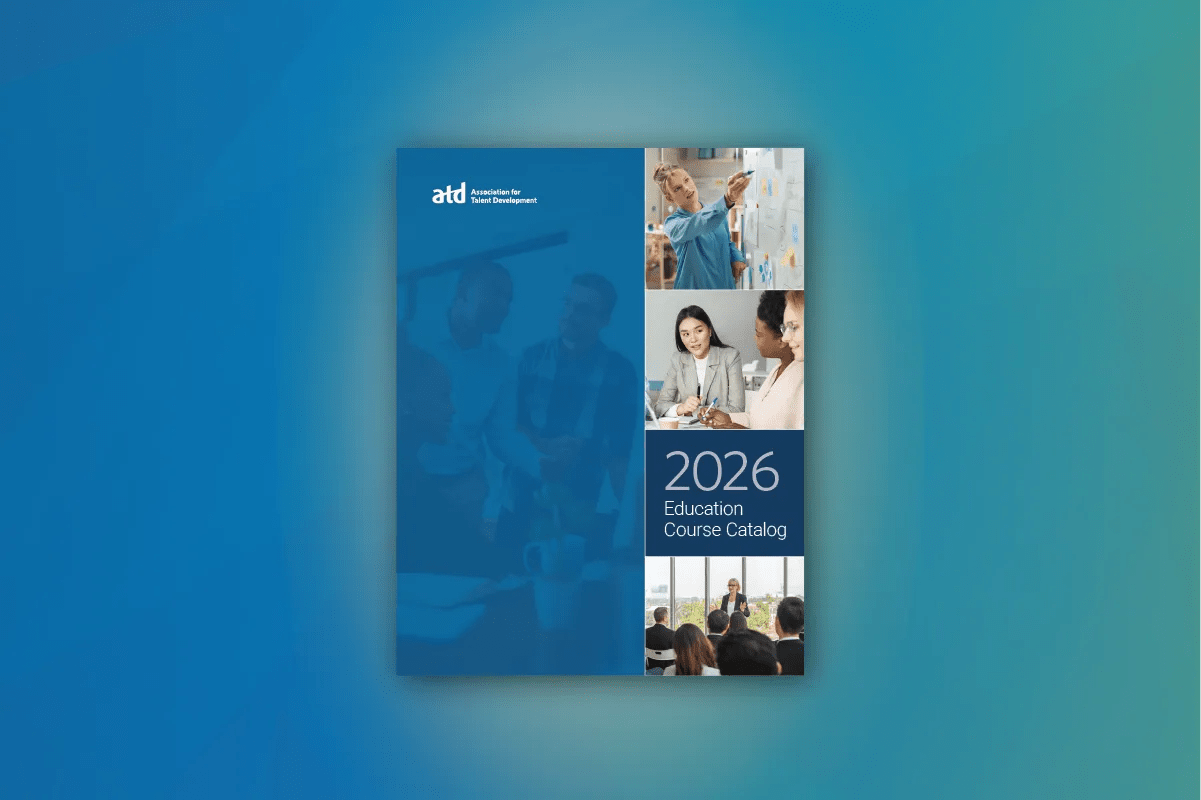
As TD professionals, it’s our job to encourage, promote, and inspire people to learn and grow. And it’s critical that we do the same for you. Explore 160+ courses for practitioners like you. Start Browsing
EVENTS
ATD Events
Talent development professionals come together to give you conference experiences that are diverse in education, solutions, and opportunities. Learn more!
MEMBERSHIP
Membership
Elevate your career, expand your horizons, and make a lasting impact. Join us today and embark on a journey of growth, connection, and achievement with ATD. Your future self will thank you.

BOOKS
Publications
ATD Press is an internationally renowned source of insightful and practical information on talent development and professional development.
Free E-Book: Creating a Participant/Facilitator Guide
This guide includes best practices for creating a participant/facilitator guide to support the valuable learning experiences you provide. This ATD members-only resource is being offered to the public for a limited time only!