ATD, association for talent development

ATD Blog

How to Perform a Needs Assessment

By

Wed May 05 2021

How to Conduct a Needs Assessment
Loading...

Content

Organizations and talent development (TD) professionals use needs assessments to identify the gaps between current situations and desired business results.

Organizations and talent development (TD) professionals use needs assessments to identify the gaps between current situations and desired business results.

Content

Let’s examine the ins and outs of this vital tool.

Let’s examine the ins and outs of this vital tool.

What Is a Needs Assessment?

Content

Gus Presta, in a September 2018 CTDO magazine article , described a needs assessment as “a study of the gap between an organization’s desired state and its current state. When done correctly, it challenges assumptions and broadens the discussion to include data and divergent perspectives, group and individual biases, better decision making, inclusion, and better, faster business results.”

Gus Presta, in a September 2018 CTDO magazine article, described a needs assessment as “a study of the gap between an organization’s desired state and its current state. When done correctly, it challenges assumptions and broadens the discussion to include data and divergent perspectives, group and individual biases, better decision making, inclusion, and better, faster business results.”

Content

A needs assessment process determines what kind of solution is needed to gain the desired results. Without it, TD professionals risk creating training programs that do not solve an organization’s business or performance improvement problems.

A needs assessment process determines what kind of solution is needed to gain the desired results. Without it, TD professionals risk creating training programs that do not solve an organization’s business or performance improvement problems.

What Are the Steps to Needs Assessment?
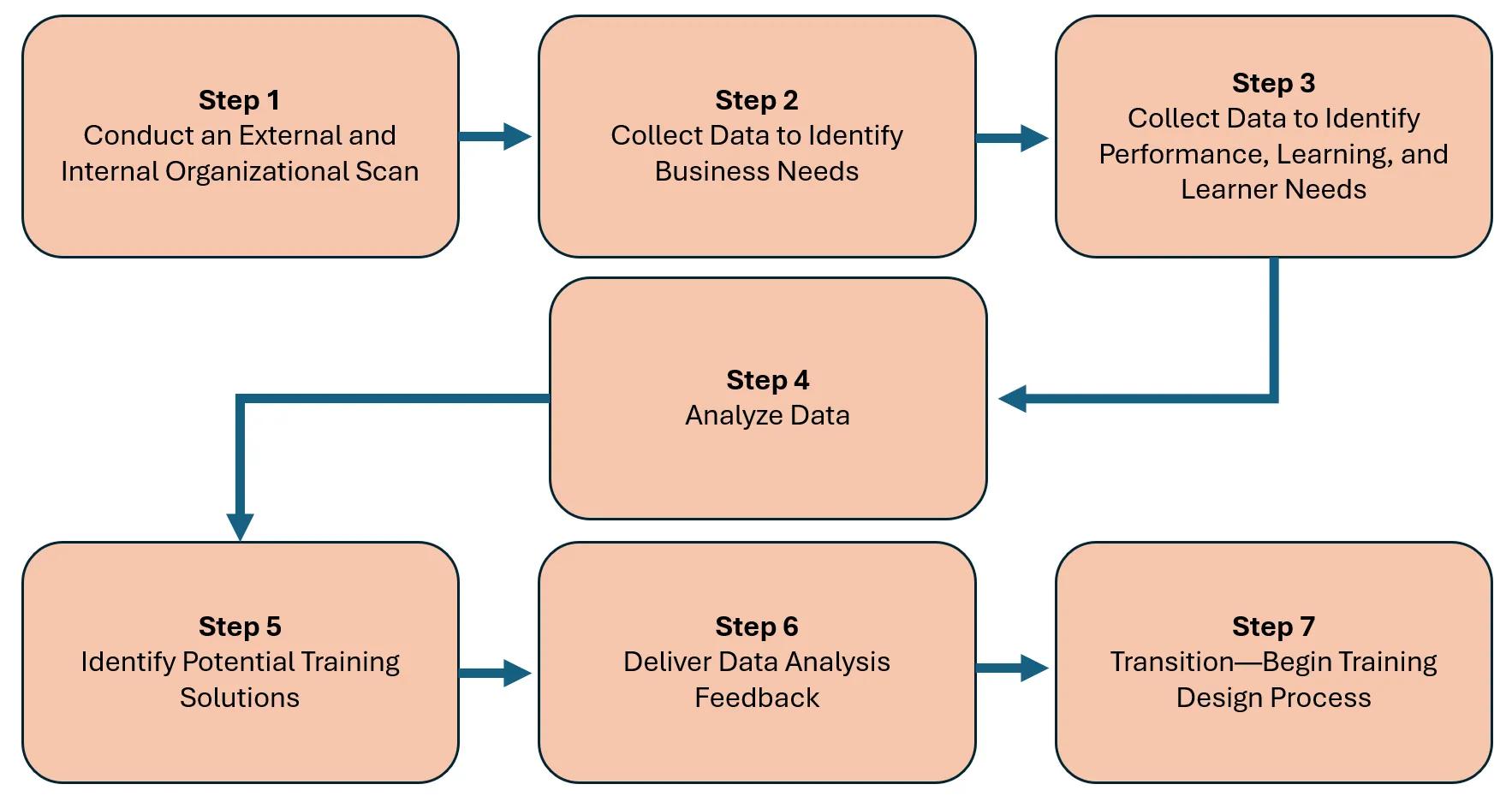
This image lays out the seven steps to conducting a needs assessment

Content

According to Deborah D. Tobey and Beth McGoldrick in Needs Assessment Basics, 2nd Edition , the needs assessment process has seven steps:

According to Deborah D. Tobey and Beth McGoldrick in Needs Assessment Basics, 2nd Edition, the needs assessment process has seven steps:

Step 1. Conduct an External and Internal Organizational Scan

Content

Scanning the internal and external environment and gathering information from different sources, such as newspapers, current events, annual reports, financial statements, customer service data, strategic plans, benchmarking, and the breakroom, ensures that your assessment is thorough. For example, if a hospital wants to evaluate the effectiveness of its healthcare providers, it would be wise to set a benchmark for success against other hospitals.

Scanning the internal and external environment and gathering information from different sources, such as newspapers, current events, annual reports, financial statements, customer service data, strategic plans, benchmarking, and the breakroom, ensures that your assessment is thorough. For example, if a hospital wants to evaluate the effectiveness of its healthcare providers, it would be wise to set a benchmark for success against other hospitals.

Step 2. Collect Data to Identify Business Needs

Content

Current organizational needs usually fall into three categories:

Current organizational needs usually fall into three categories:

  • Content

    An opportunity that must be capitalized upon (for example, a new product or market)

    An opportunity that must be capitalized upon (for example, a new product or market)

  • Content

    A problem that must be resolved (for example, customer complaints, poor product quality, or absenteeism)

    A problem that must be resolved (for example, customer complaints, poor product quality, or absenteeism)

  • Content

    A business strategy that must be supported (for example, a marketing and product approach that caters to a certain age group)

    A business strategy that must be supported (for example, a marketing and product approach that caters to a certain age group)

Step 3. Collect Data to Identify Performance, Learning, and Learner Needs

Content

Multiple sources of data must be addressed to identify desired and current job performance, desired and current skill and knowledge level, and learner needs. Each set of needs will likely include needs based on employees’ lack of knowledge or skills (which can be addressed by training) and needs that are affected by other factors that require non-training solutions. There are a variety of data collection tools that can be used, but utilizing focus groups can help you reach the target audience of your training programs as well.

Multiple sources of data must be addressed to identify desired and current job performance, desired and current skill and knowledge level, and learner needs. Each set of needs will likely include needs based on employees’ lack of knowledge or skills (which can be addressed by training) and needs that are affected by other factors that require non-training solutions. There are a variety of data collection tools that can be used, but utilizing focus groups can help you reach the target audience of your training programs as well.

Step 4. Analyze Data

Content

Once the assessment results have been collected it will have to be sorted and evaluated to discover patterns. Data analysis yields key information that identifies the gaps between desired and current job performance as well as between desired and current knowledge and skill levels so that the ultimate training design will target those gaps. Understanding the magnitude of these gaps also assists the needs assessor in assigning priorities to the various issues that must be addressed.

Once the assessment results have been collected it will have to be sorted and evaluated to discover patterns. Data analysis yields key information that identifies the gaps between desired and current job performance as well as between desired and current knowledge and skill levels so that the ultimate training design will target those gaps. Understanding the magnitude of these gaps also assists the needs assessor in assigning priorities to the various issues that must be addressed.

Step 5. Identify Potential Training Solutions

Content

At this point in the process, potential training initiatives have usually been identified by either the needs assessor or the client through the assessment data. Sometimes the assessors will approach their clients to share discoveries, and sometimes the clients make the first move. Evaluate the organization’s existing resources so that key stakeholders know that all possible solutions are being explored.

At this point in the process, potential training initiatives have usually been identified by either the needs assessor or the client through the assessment data. Sometimes the assessors will approach their clients to share discoveries, and sometimes the clients make the first move. Evaluate the organization’s existing resources so that key stakeholders know that all possible solutions are being explored.

Step 6. Deliver Data Analysis Feedback

Content

The needs assessor makes a presentation or generates a report for the client detailing data analysis, training recommendations for design and delivery, and non-training recommendations (recommendations to resolve issues that are not caused by knowledge or skill deficiencies). This is a crucial step because gaining buy-in is critical when it comes to proving the importance of a needs assessment. A 2018 ATD whitepaper found that only 56 percent of organizations conduct needs assessments.

The needs assessor makes a presentation or generates a report for the client detailing data analysis, training recommendations for design and delivery, and non-training recommendations (recommendations to resolve issues that are not caused by knowledge or skill deficiencies). This is a crucial step because gaining buy-in is critical when it comes to proving the importance of a needs assessment. A 2018 ATD whitepaper found that only 56 percent of organizations conduct needs assessments.

Step 7. Transition—Begin Training Design Process

Content

This is where the process moves into design. If the needs assessment has been done properly, then the instructional designer will have the information needed to produce targeted learning objectives, learning activities, job-relevant content and materials to support activities, measurement and evaluation tools, and a learning environment.

This is where the process moves into design. If the needs assessment has been done properly, then the instructional designer will have the information needed to produce targeted learning objectives, learning activities, job-relevant content and materials to support activities, measurement and evaluation tools, and a learning environment.

Content

It is critical that any training initiative undertaken be directly linked to the business needs of the organization. If not, value is not added.

It is critical that any training initiative undertaken be directly linked to the business needs of the organization. If not, value is not added.

What to Expect for Your First Needs Assessment

Content

This excerpt is from an interview with Kelly L. Jones and Jody N. Lumsden, authors of Needs Assessment on a Shoestring .

This excerpt is from an interview with Kelly L. Jones and Jody N. Lumsden, authors of Needs Assessment on a Shoestring.

Content

Here are some of the specific skills you’ll need to develop:

Here are some of the specific skills you’ll need to develop:

  • Content

    Organizational insight : Through data collection, you will develop a deeper understanding of the organization’s goals, culture, and challenges. You will also discover how different departments, community members, and teams contribute to the overall mission.

    Organizational insight: Through data collection, you will develop a deeper understanding of the organization’s goals, culture, and challenges. You will also discover how different departments, community members, and teams contribute to the overall mission.

  • Content

    Interpersonal relationships: Your work will involve interacting with a diverse range of individuals within the organization, from employees at all levels to senior management. You will need to develop strong working relationships and build trust with stakeholders throughout the organization.

    Interpersonal relationships: Your work will involve interacting with a diverse range of individuals within the organization, from employees at all levels to senior management. You will need to develop strong working relationships and build trust with stakeholders throughout the organization.

  • Content

    Project management: In your needs assessment projects, you will develop milestones, create timelines, and ensure that the project runs smoothly. You will learn to organize and prioritize tasks, track progress, and adjust the scope as needed to complete the project.

    Project management: In your needs assessment projects, you will develop milestones, create timelines, and ensure that the project runs smoothly. You will learn to organize and prioritize tasks, track progress, and adjust the scope as needed to complete the project.

  • Content

    Critical thinking: You must think critically when analyzing data and coming up with innovative solutions to problems.

    Critical thinking: You must think critically when analyzing data and coming up with innovative solutions to problems.

  • Content

    Reporting and presenting : Clear and timely communication is key to conveying information to your stakeholders. Learn to create detailed, compelling reports and deliver presentations tailored to your audience, whether it is senior management, department heads, or employees.

    Reporting and presenting: Clear and timely communication is key to conveying information to your stakeholders. Learn to create detailed, compelling reports and deliver presentations tailored to your audience, whether it is senior management, department heads, or employees.

  • Content

    Adaptability and flexibility : Needs assessment projects evolve and change as new information surfaces or organizational priorities shift. Be ready for this by remaining flexible with your methods and being willing to adapt your approach to work within the new conditions.

    Adaptability and flexibility: Needs assessment projects evolve and change as new information surfaces or organizational priorities shift. Be ready for this by remaining flexible with your methods and being willing to adapt your approach to work within the new conditions.

Benefits of a Needs Assessment

Content

The primary benefits of conducting a needs assessment, according to Ashley Chaisson’s Needs Assessment Toolkit , include:

The primary benefits of conducting a needs assessment, according to Ashley Chaisson’s Needs Assessment Toolkit, include:

  • Content

    Informs decision makers of identified gaps

    Informs decision makers of identified gaps

  • Content

    Facilitates decision making and allows you to prioritize solutions

    Facilitates decision making and allows you to prioritize solutions

  • Content

    Provides data to justify proposed solutions, such as methods for measuring success

    Provides data to justify proposed solutions, such as methods for measuring success

  • Content

    Allows for reflection on previous decisions, current methods, lessons learned, and so on

    Allows for reflection on previous decisions, current methods, lessons learned, and so on

How Is a Needs Assessment Conducted?
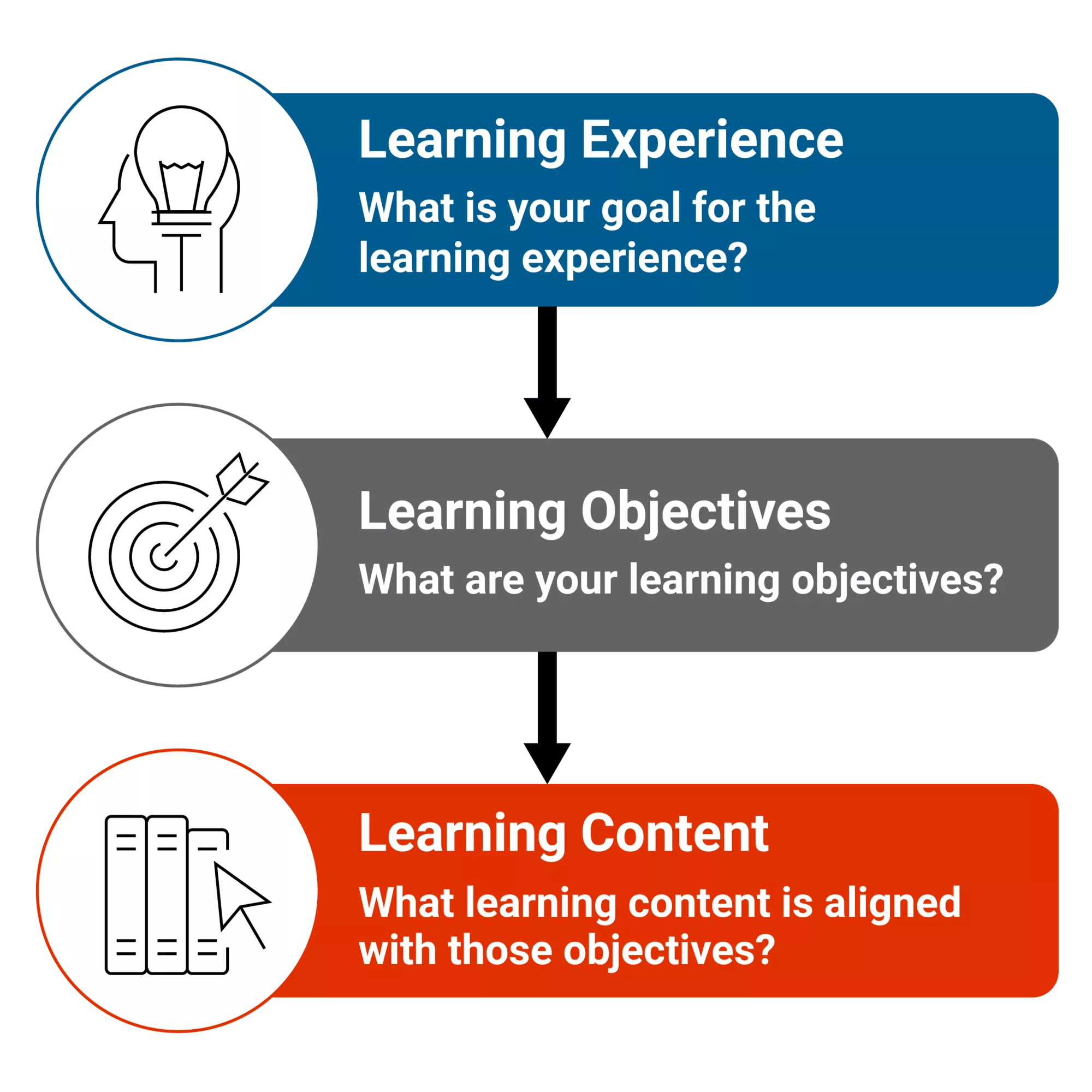
Three Levels of Learning Needs_GR

Content

Needs Assessment Basics, 2nd Edition maps out the data collection methods, which are either qualitative or quantitative.

Needs Assessment Basics, 2nd Edition maps out the data collection methods, which are either qualitative or quantitative.

Content

Quantitative methods— surveys, assessments, and tests, and job task analysis—are those that result in hard data, which are objective and measurable, whether stated in terms of frequency, percentage, proportion, or time.

Quantitative methods— surveys, assessments, and tests, and job task analysis—are those that result in hard data, which are objective and measurable, whether stated in terms of frequency, percentage, proportion, or time.

Content

Qualitative measures— Interviews, critical incident interviews, focus groups, and observation—yield soft data, which are more intangible, anecdotal, personal, and subjective, such as opinions, attitudes, assumptions, feelings, values, and desires.

Qualitative measures— Interviews, critical incident interviews, focus groups, and observation—yield soft data, which are more intangible, anecdotal, personal, and subjective, such as opinions, attitudes, assumptions, feelings, values, and desires.

Content

Quantitative and qualitative evaluation tools are both important to the data collection process and would work well here. For example, knowing how job performers feel (qualitative measure) about a skill will be just as important in the ultimate training design as knowing how well (quantitative measure) they perform it.

Quantitative and qualitative evaluation tools are both important to the data collection process and would work well here. For example, knowing how job performers feel (qualitative measure) about a skill will be just as important in the ultimate training design as knowing how well (quantitative measure) they perform it.

Example Questions

  1. Content

    Business & Strategic Alignment – Identifies whether learning supports organizational goals

    Business & Strategic Alignment – Identifies whether learning supports organizational goals

    1. Content

      What are the organization’s top strategic priorities over the next 12–24 months?

      What are the organization’s top strategic priorities over the next 12–24 months?

    2. Content

      Which business goals are currently not being met?

      Which business goals are currently not being met?

    3. Content

      Where are performance gaps having the greatest impact on results (for example, revenue, quality, customer satisfaction, safety)?

      Where are performance gaps having the greatest impact on results (for example, revenue, quality, customer satisfaction, safety)?

  2. Content

    Performance Gaps – Clarifies what should be happening vs. what is happening

    Performance Gaps – Clarifies what should be happening vs. what is happening

    1. Content

      What are employees expected to do differently to meet performance standards?

      What are employees expected to do differently to meet performance standards?

    2. Content

      Where are current performance levels falling short of expectations?

      Where are current performance levels falling short of expectations?

    3. Content

      Which roles or teams are most affected by these gaps?

      Which roles or teams are most affected by these gaps?

    4. Content

  3. Content

    Root Cause Analysis – Determines whether training is the right solution

    Root Cause Analysis – Determines whether training is the right solution

    1. Content

      Do employees know what is expected of them?

      Do employees know what is expected of them?

    2. Content

      Do they have the necessary skills and knowledge to perform effectively?

      Do they have the necessary skills and knowledge to perform effectively?

    3. Content

      Are tools, systems, or resources adequate to support performance?

      Are tools, systems, or resources adequate to support performance?

  4. Content

    Learning & Capability Needs – Identifies knowledge and skill requirements

    Learning & Capability Needs – Identifies knowledge and skill requirements

    1. Content

      What knowledge or skills are critical for success in this role?

      What knowledge or skills are critical for success in this role?

    2. Content

      Where do employees feel least confident in their work?

      Where do employees feel least confident in their work?

    3. Content

      What new skills will be required in the next 1–3 years?

      What new skills will be required in the next 1–3 years?

  5. Content

    Audience & Learner Characteristics –Ensures learning is designed for the workforce

    Audience & Learner Characteristics –Ensures learning is designed for the workforce

    1. Content

      Who is the target audience for this initiative?

      Who is the target audience for this initiative?

    2. Content

      What is their experience level with the topic?

      What is their experience level with the topic?

    3. Content

      What time constraints or workload pressures exist?

      What time constraints or workload pressures exist?

  6. Content

    Organizational Readiness & Support – Assesses conditions for successful implementation

    Organizational Readiness & Support – Assesses conditions for successful implementation

    1. Content

      Do leaders support addressing this issue?

      Do leaders support addressing this issue?

    2. Content

      Will managers reinforce and model desired behaviors?

      Will managers reinforce and model desired behaviors?

    3. Content

      What barriers might prevent applying new skills on the job?

      What barriers might prevent applying new skills on the job?

  7. Content

    Measurement & Success Criteria – Defines how impact will be evaluated

    Measurement & Success Criteria – Defines how impact will be evaluated

    1. Content

      What will success look like at the individual, team, and organizational levels?

      What will success look like at the individual, team, and organizational levels?

    2. Content

      How will performance improvement be measured?

      How will performance improvement be measured?

    3. Content

      What data is currently available to track outcomes?

      What data is currently available to track outcomes?

Why a Needs Assessment Is Critical for Organizational Success

Content

A needs assessment is critical for organizational success because it ensures time, money, and effort are focused on solving the right problems, not just the most visible ones. Rather than assuming training is the solution, a needs assessment systematically identifies gaps between current performance and desired outcomes, clarifying whether the issue is related to skills, processes, resources, or organizational systems.

A needs assessment is critical for organizational success because it ensures time, money, and effort are focused on solving the right problems, not just the most visible ones. Rather than assuming training is the solution, a needs assessment systematically identifies gaps between current performance and desired outcomes, clarifying whether the issue is related to skills, processes, resources, or organizational systems.

Content

From a business perspective, a needs assessment aligns learning and development initiatives with strategic goals. By grounding decisions in data, organizations can prioritize initiatives that have the greatest impact on results. This alignment helps leaders justify investments and demonstrates the value of talent development as a strategic partner.

From a business perspective, a needs assessment aligns learning and development initiatives with strategic goals. By grounding decisions in data, organizations can prioritize initiatives that have the greatest impact on results. This alignment helps leaders justify investments and demonstrates the value of talent development as a strategic partner.

Content

A needs assessment also improves the effectiveness of solutions. Understanding learner characteristics, workplace constraints, and root causes allows organizations to design targeted interventions or seek the right technical assistance. When solutions address real needs and are supported by leadership and systems, employees are more likely to apply what they learn on the job. Ultimately, organizations that conduct needs assessments reduce wasted effort, improve performance outcomes, and build a culture of evidence-based decision making.

A needs assessment also improves the effectiveness of solutions. Understanding learner characteristics, workplace constraints, and root causes allows organizations to design targeted interventions or seek the right technical assistance. When solutions address real needs and are supported by leadership and systems, employees are more likely to apply what they learn on the job. Ultimately, organizations that conduct needs assessments reduce wasted effort, improve performance outcomes, and build a culture of evidence-based decision making.

Quick Tips

  • Content

    Don’t assume that what worked in the past will work now. Get out of your comfort zone and be open to change.

    Don’t assume that what worked in the past will work now. Get out of your comfort zone and be open to change.

  • Content

    Use an ideal vision as the underlying basis for planning.

    Use an ideal vision as the underlying basis for planning.

  • Content

    Differentiate between ends and means (focus on what before how).

    Differentiate between ends and means (focus on what before how).

  • Content

    Prepare objectives—including ideal vision and mission objectives—that have measures of how you will know when you have arrived (mission statement and success criteria).

    Prepare objectives—including ideal vision and mission objectives—that have measures of how you will know when you have arrived (mission statement and success criteria).

  • Content

    Define “need” as a gap in results (not as insufficient levels of resources, means, or methods).

    Define “need” as a gap in results (not as insufficient levels of resources, means, or methods).

Content

For a more in-depth view of needs assessment, check out Needs Assessment Basics, 2nd Edition . ATD members can also access a sample needs assessment here .

For a more in-depth view of needs assessment, check out Needs Assessment Basics, 2nd Edition. ATD members can also access a sample needs assessment here.

You've Reached ATD Member-only Content

Become an ATD member to continue

Already a member?Sign In


Copyright © 2026 ATD

ASTD changed its name to ATD to meet the growing needs of a dynamic, global profession.

Terms of UsePrivacy NoticeCookie Policy