
CTDO Magazine Article
Be a Planner
Content
Leverage your role as a CTDO to enhance your organization's strategic plan and boost your value.
Leverage your role as a CTDO to enhance your organization's strategic plan and boost your value.
Fri Apr 15 2022

Content
Leverage your role as a CTDO to enhance your organization's strategic plan and boost your value.
Leverage your role as a CTDO to enhance your organization's strategic plan and boost your value.
Content
Benjamin Franklin quipped, "If you fail to plan, you are planning to fail." It's a formula that has proven true for businesses, and few would argue with the necessity of effective planning.
Benjamin Franklin quipped, "If you fail to plan, you are planning to fail." It's a formula that has proven true for businesses, and few would argue with the necessity of effective planning.
Content
Yet, many organizations continue to believe good strategic planning is simply taking ill-prepared executives on multiday retreats and asking them to post ideas around the room. Frequently, those same executives later attempt to translate the information into some type of strategic plan for the board to review and approve.
Yet, many organizations continue to believe good strategic planning is simply taking ill-prepared executives on multiday retreats and asking them to post ideas around the room. Frequently, those same executives later attempt to translate the information into some type of strategic plan for the board to review and approve.
Content
Unfortunately, and all too often, bureaucratic approval processes, management misalignment, and poor leadership ability ultimately prevent successful plan execution. That is far from a thorough and robust approach to developing and executing strategy.
Unfortunately, and all too often, bureaucratic approval processes, management misalignment, and poor leadership ability ultimately prevent successful plan execution. That is far from a thorough and robust approach to developing and executing strategy.
Content
Imagine how much better it would be if you as a chief talent development officer, with your skill set and talent, engaged fully in the process. To do so, it's essential to ask yourself three questions about the company's strategic planning process:
Imagine how much better it would be if you as a chief talent development officer, with your skill set and talent, engaged fully in the process. To do so, it's essential to ask yourself three questions about the company's strategic planning process:
Content
Is our planning process thorough and robust enough to develop a plan that moves the company forward?
Is our planning process thorough and robust enough to develop a plan that moves the company forward?
Content
Are our leaders aligned and adequately prepared to execute strategy?
Are our leaders aligned and adequately prepared to execute strategy?
Content
Is my expertise as a CTDO being fully leveraged to ensure organizational success?
Is my expertise as a CTDO being fully leveraged to ensure organizational success?
Strategy defined
Content
In its simplest form, strategy is the coordinated means by which an organization pursues its goals and objectives. A strategy incorporates actions, both those to take and those planned for so that an organization achieves its objectives.
In its simplest form, strategy is the coordinated means by which an organization pursues its goals and objectives. A strategy incorporates actions, both those to take and those planned for so that an organization achieves its objectives.
Content
Challenge your executive colleagues to be mindful of the purpose of strategy development—your collective goal is to gain advantage and success for the business.
Challenge your executive colleagues to be mindful of the purpose of strategy development—your collective goal is to gain advantage and success for the business.
Organizational strategy development
Content
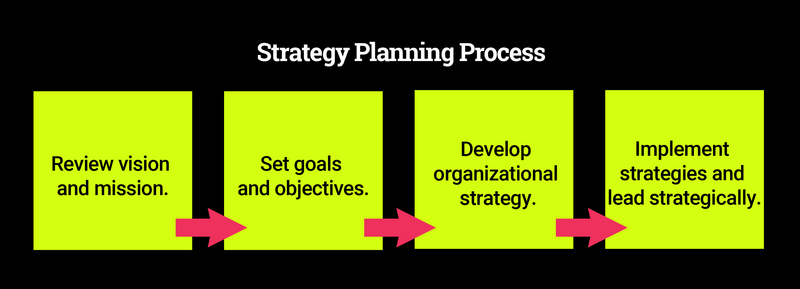
The strategy development process typically starts with a review of the company's vision, mission, and values to help answer the question: Do these still represent who we are?
The strategy development process typically starts with a review of the company's vision, mission, and values to help answer the question: Do these still represent who we are?
Content
Next, set goals and objectives to determine what the business wants and needs to achieve to remain competitive and successful. Then conduct an internal self-assessment of strengths and weaknesses to gauge organizational resources and capabilities to execute.
Next, set goals and objectives to determine what the business wants and needs to achieve to remain competitive and successful. Then conduct an internal self-assessment of strengths and weaknesses to gauge organizational resources and capabilities to execute.
Content
Take an outward look to identify opportunities to leverage and threats in the market of which to be aware. From all of that, develop organizational strategies. Action planning, coordinated implementation, and strategic leadership are required to execute those strategies.
Take an outward look to identify opportunities to leverage and threats in the market of which to be aware. From all of that, develop organizational strategies. Action planning, coordinated implementation, and strategic leadership are required to execute those strategies.
Content
Some companies take a more robust approach to the strategy development process. They conduct an intensive internal review by performing a talent assessment of internal leadership capabilities and potential as well as conduct an external business review.
Some companies take a more robust approach to the strategy development process. They conduct an intensive internal review by performing a talent assessment of internal leadership capabilities and potential as well as conduct an external business review.
Content
The result is a more comprehensive understanding of the business's capabilities and resources to execute strategy and a broader look at the external factors affecting success.
The result is a more comprehensive understanding of the business's capabilities and resources to execute strategy and a broader look at the external factors affecting success.
Execution
Content
Numerous studies indicate that excellence in execution is the number 1 challenge facing business leaders around the world. Regardless of how sophisticated or comprehensive a strategic planning process and plan are, if the organization fails to attain the intended results, then efforts have been for naught.
Numerous studies indicate that excellence in execution is the number 1 challenge facing business leaders around the world. Regardless of how sophisticated or comprehensive a strategic planning process and plan are, if the organization fails to attain the intended results, then efforts have been for naught.
Content
CTDOs play a significant role in helping companies execute strategy. The inability to work in an interdisciplinary manner is often cited as the main reason strategy execution fails.
CTDOs play a significant role in helping companies execute strategy. The inability to work in an interdisciplinary manner is often cited as the main reason strategy execution fails.
Content
Identifying and developing leaders who can lead across organizational silos, set the long-term vision, block out distractions, and focus on strategic priorities are critical to successful implementation. Developing leadership talent may be the primary way you positively affect the entire strategic planning and strategy execution processes. That is what CTDOs do.
Identifying and developing leaders who can lead across organizational silos, set the long-term vision, block out distractions, and focus on strategic priorities are critical to successful implementation. Developing leadership talent may be the primary way you positively affect the entire strategic planning and strategy execution processes. That is what CTDOs do.
Common pitfalls
Content
Not engaging CTDOs in the strategic planning process is the leading reason most companies derail the successful implementation and execution of their strategic plans. You are in the best position to ensure that the most suited people are ready to execute the strategy.
Not engaging CTDOs in the strategic planning process is the leading reason most companies derail the successful implementation and execution of their strategic plans. You are in the best position to ensure that the most suited people are ready to execute the strategy.
Content
Another often overlooked pitfall is believing vertical alignment is best for execution. Organizations often rely on vertical alignment as they create their strategy, but the reality is that multiple departments must collaborate to execute the strategy. Guide strategic planning by emphasizing an interdisciplinary approach.
Another often overlooked pitfall is believing vertical alignment is best for execution. Organizations often rely on vertical alignment as they create their strategy, but the reality is that multiple departments must collaborate to execute the strategy. Guide strategic planning by emphasizing an interdisciplinary approach.
Content
Other pitfalls include:
Other pitfalls include:
Content
Disallowing flexibility
Disallowing flexibility
Content
Resisting change
Resisting change
Content
Failing to communicate the plan effectively across the organization
Failing to communicate the plan effectively across the organization
Content
Neglecting to periodically assess and develop leadership talent
Neglecting to periodically assess and develop leadership talent
Content
Not including key stakeholders in the process
Not including key stakeholders in the process
Getting and staying engaged
Content
Is there anything more critical to an organization's success than its people? As companies continue to face mounting challenges of finding talent—particularly leadership talent—your role and importance will grow.
Is there anything more critical to an organization's success than its people? As companies continue to face mounting challenges of finding talent—particularly leadership talent—your role and importance will grow.
Content
Remind your executive colleagues and CEO of the critical knowledge, skills, and abilities you bring to the strategic planning and execution process and how important the talent life cycle is to the business.
Remind your executive colleagues and CEO of the critical knowledge, skills, and abilities you bring to the strategic planning and execution process and how important the talent life cycle is to the business.
Model the process
Content
Familiarize yourself with the strategic planning process and lead by example by modeling it in your areas of responsibility. Once the organization formalizes its strategic plan, use the same method to develop a strategic plan within your leadership domain that aligns with and supports the business strategies. Be sure to:
Familiarize yourself with the strategic planning process and lead by example by modeling it in your areas of responsibility. Once the organization formalizes its strategic plan, use the same method to develop a strategic plan within your leadership domain that aligns with and supports the business strategies. Be sure to:
Content
Align talent goals with business goals.
Align talent goals with business goals.
Content
Develop talent analytics to measure goal execution and success.
Develop talent analytics to measure goal execution and success.
Content
Review talent within the domain for performance and potential.
Review talent within the domain for performance and potential.
Content
Create succession planning charts for leadership growth and development.
Create succession planning charts for leadership growth and development.
Content
Develop retention strategies for key talent leadership.
Develop retention strategies for key talent leadership.
Content
People are the greatest resource for any successful business. You and the company must identify, acquire, develop, engage, and retain them. Provide them with a road map for professional and organizational success so that they can be successful. A robust, comprehensive strategic plan helps provide that map.
People are the greatest resource for any successful business. You and the company must identify, acquire, develop, engage, and retain them. Provide them with a road map for professional and organizational success so that they can be successful. A robust, comprehensive strategic plan helps provide that map.
Content
As businesses struggle with the people equation, you are vital to your company's overall success. Engaging in the strategic planning process is not optional.
As businesses struggle with the people equation, you are vital to your company's overall success. Engaging in the strategic planning process is not optional.
Content
John Zorbini is an executive consultant and coach. Contact him at [email protected] .
John Zorbini is an executive consultant and coach. Contact him at [email protected].
Key Terms, Definitions, and Components
Content
As a CTDO, you need a clear understanding of the basic language associated with strategy planning. Here are the primary terms and definitions with which to familiarize yourself.
As a CTDO, you need a clear understanding of the basic language associated with strategy planning. Here are the primary terms and definitions with which to familiarize yourself.
Content
Strategic planning: The process of creating specific business strategies and a road map for how the organization will implement and evaluate them to ensure success
Strategic planning: The process of creating specific business strategies and a road map for how the organization will implement and evaluate them to ensure success
Content
Strategic plan: A document to communicate to stakeholders the organization's goals, the actions needed to achieve those goals, and the metrics to measure that achievement
Strategic plan: A document to communicate to stakeholders the organization's goals, the actions needed to achieve those goals, and the metrics to measure that achievement
Content
Mission and vision: Declaration statements of a company's fundamental purpose, what it values, and its view of the future
Mission and vision: Declaration statements of a company's fundamental purpose, what it values, and its view of the future
Content
Goals and objectives: Broad indications of company intentions and the measurable steps for achieving them
Goals and objectives: Broad indications of company intentions and the measurable steps for achieving them
Content
SWOT analysis: A tool to assist organizations in examining internal (strengths and weaknesses) and external (opportunities and threats) factors that could affect their ability to develop and execute strategy
SWOT analysis: A tool to assist organizations in examining internal (strengths and weaknesses) and external (opportunities and threats) factors that could affect their ability to develop and execute strategy
Content
Talent review: A structured process for assessing individual leadership performance and potential for growth
Talent review: A structured process for assessing individual leadership performance and potential for growth
Content
Business review: A structured process for assessing key business line performance and growth potential
Business review: A structured process for assessing key business line performance and growth potential
Content
Strategy: The coordinated means by which an organization pursues its goals and objectives to gain an advantage and achieve success
Strategy: The coordinated means by which an organization pursues its goals and objectives to gain an advantage and achieve success
Content
Strategic leadership: The ability to work in an interdisciplinary fashion, set a long-term vision, avoid distractions, and focus on the priorities to achieve success
Strategic leadership: The ability to work in an interdisciplinary fashion, set a long-term vision, avoid distractions, and focus on the priorities to achieve success
Content
Strategy execution: The process of translating the organization's strategic initiatives into action and obtaining intended results
Strategy execution: The process of translating the organization's strategic initiatives into action and obtaining intended results
Content
Strategic thinking: The ability to recognize the relationships, complexities, and implications of a situation; anticipate possibilities; and plan what to do—a best guess about the future
Strategic thinking: The ability to recognize the relationships, complexities, and implications of a situation; anticipate possibilities; and plan what to do—a best guess about the future
Content
Read more from CTDO magazine : Essential talent development content for C-suite leaders.
Read more from CTDO magazine: Essential talent development content for C-suite leaders.
View Courses Recommended for You