ATD, association for talent development

CTDO Magazine Article

Critical Skills Gaps Remain in the Workforce

Content

Companies are taking steps to fill the gaps with training and assessments.

Companies are taking steps to fill the gaps with training and assessments.

By

Fri Apr 15 2022

Critical Skills Gaps Remain in the Workforce
Loading...

Content

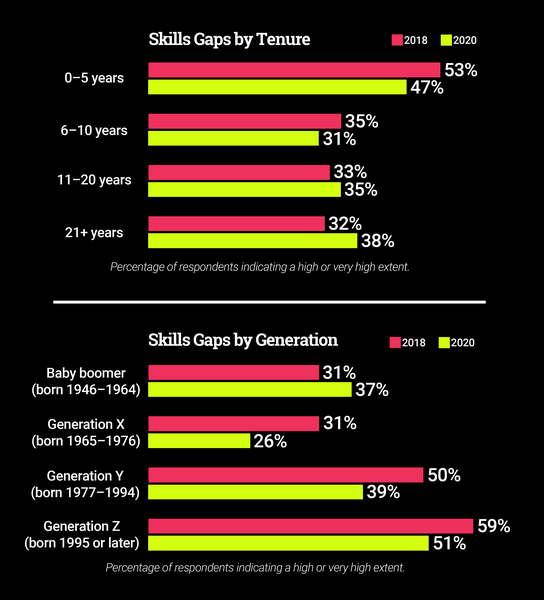
The number of organizations reporting a skills gap hasn't changed since the last time the Association for Talent Development collected data in 2018. But on the bright side, ATD's recent Bridging the Skills Gap: Workforce Development in Changing Times report reveals that more companies are examining what skills are needed to be successful now and in the future,

The number of organizations reporting a skills gap hasn't changed since the last time the Association for Talent Development collected data in 2018. But on the bright side, ATD's recent Bridging the Skills Gap: Workforce Development in Changing Times report reveals that more companies are examining what skills are needed to be successful now and in the future,

Content

The top five skills businesses currently lack critical thinking and problem-solving skills, managerial and supervisory skills, communication and interpersonal skills, leadership and executive-level skills, and creativity and innovation skills. Companies noted that those same skills are necessary for the future, except in a different order: critical thinking and problem solving, leadership and executive level, creativity and innovation, managerial and supervisory, and communication and interpersonal.

The top five skills businesses currently lack critical thinking and problem-solving skills, managerial and supervisory skills, communication and interpersonal skills, leadership and executive-level skills, and creativity and innovation skills. Companies noted that those same skills are necessary for the future, except in a different order: critical thinking and problem solving, leadership and executive level, creativity and innovation, managerial and supervisory, and communication and interpersonal.

Content

"There are many factors contributing to the skills gap in the United States, including a lack of education or training in the skills needed, the global COVID-19 pandemic, increasing numbers of employees leaving jobs in some industries, changing technology, and retirements and a loss of knowledge," the report states. "To effectively overcome the skills gap, organizations need to recognize and address these contributing factors."

"There are many factors contributing to the skills gap in the United States, including a lack of education or training in the skills needed, the global COVID-19 pandemic, increasing numbers of employees leaving jobs in some industries, changing technology, and retirements and a loss of knowledge," the report states. "To effectively overcome the skills gap, organizations need to recognize and address these contributing factors."

Content

When asked who is responsible for addressing those gaps, 71 percent of surveyed talent development professionals said the TD or training department bears the responsibility. Next in line are HR and line managers within each business unit.

When asked who is responsible for addressing those gaps, 71 percent of surveyed talent development professionals said the TD or training department bears the responsibility. Next in line are HR and line managers within each business unit.

Content

Organizations' approaches to addressing the skills gaps include providing more internal training, examining what skills the organization needs to be successful now and in the future, and assessing current gaps and creating a plan to address the most critical areas.

Organizations' approaches to addressing the skills gaps include providing more internal training, examining what skills the organization needs to be successful now and in the future, and assessing current gaps and creating a plan to address the most critical areas.

Content

The report offers a seven-step action plan to combat the gaps:

The report offers a seven-step action plan to combat the gaps:

  1. Content

    Clarify and understand the organization's performance metrics.

    Clarify and understand the organization's performance metrics.

  2. Content

    Identify capabilities and skills that map to strategies and performance metrics.

    Identify capabilities and skills that map to strategies and performance metrics.

  3. Content

    Assess the skills gap.

    Assess the skills gap.

  4. Content

    Set goals and prioritize the path to filling gaps.

    Set goals and prioritize the path to filling gaps.

  5. Content

    Implement solutions and monitor sustainability.

    Implement solutions and monitor sustainability.

  6. Content

    Solidify organizational efforts through partnerships.

    Solidify organizational efforts through partnerships.

  7. Content

    Communicate the impact.

    Communicate the impact.

Content

"As the research shows, TD professionals can take a leadership role to address the skills gaps," the report states. "It is important that they take the steps outlined in the report to drive change and successfully navigate the gaps in their organizations."
"As the research shows, TD professionals can take a leadership role to address the skills gaps," the report states. "It is important that they take the steps outlined in the report to drive change and successfully navigate the gaps in their organizations."

Critical Skills Gaps Remain in the Workforce-SOTD3Snapshot_chart_spring22_CTDO.jpg

Content

Source: Bridging the Skills Gap: Workforce Development in Changing Times, Association for Talent Development, 2022

Source: Bridging the Skills Gap: Workforce Development in Changing Times, Association for Talent Development, 2022

Content

Read more from CTDO magazine : Essential talent development content for C-suite leaders.

Read more from CTDO magazine: Essential talent development content for C-suite leaders.

You've Reached ATD Member-only Content

Become an ATD member to continue

Already a member?Sign In


Copyright © 2026 ATD

ASTD changed its name to ATD to meet the growing needs of a dynamic, global profession.

Terms of UsePrivacy NoticeCookie Policy