
CTDO Magazine Article
Dig Out Value From the Mountain of Data
Content
Prove the talent development strategy's worth with the right data points.
Prove the talent development strategy's worth with the right data points.
Fri Jul 15 2022

Content
Prove the talent development strategy's worth with the right data points.
Prove the talent development strategy's worth with the right data points.
Content
A proactive approach to talent development means understanding where you are now in areas such as knowledge and skills development and succession planning and which tools are required to get the job done. It also means understanding where you need to be in the future and the necessary steps to get there.
A proactive approach to talent development means understanding where you are now in areas such as knowledge and skills development and succession planning and which tools are required to get the job done. It also means understanding where you need to be in the future and the necessary steps to get there.
Content
To create a proactive approach, first establish that your current strategy has a clear alignment to larger organizational goals—ensure that what the TD function is working toward will help push the company forward.
To create a proactive approach, first establish that your current strategy has a clear alignment to larger organizational goals—ensure that what the TD function is working toward will help push the company forward.
Content
The next critical step is looking at how to measure the impact of TD's work. It is not enough to say it anecdotally—you need to prove it using data. To do that, you must build data into the TD strategy. But that can be an overwhelming process for many.
The next critical step is looking at how to measure the impact of TD's work. It is not enough to say it anecdotally—you need to prove it using data. To do that, you must build data into the TD strategy. But that can be an overwhelming process for many.
Flawed data system
Content
A common mistake organizations make is to gather data expecting that once they have all the information, they will be able to see the story it tells and share that. They identify the data from various parts of a department or the company that they believe will be applicable, only to find that the ways the various parts collect and store the data are incompatible.
A common mistake organizations make is to gather data expecting that once they have all the information, they will be able to see the story it tells and share that. They identify the data from various parts of a department or the company that they believe will be applicable, only to find that the ways the various parts collect and store the data are incompatible.
Content
That leads to someone manually migrating into one system each data point—out of thousands of data points across multiple systems or even paper forms. It is often a rush job, potentially decreasing the data's validity.
That leads to someone manually migrating into one system each data point—out of thousands of data points across multiple systems or even paper forms. It is often a rush job, potentially decreasing the data's validity.
Content
The end results are a mix of quantitative and qualitative data points that do not clearly align. However, by developing a data strategy, you can avoid that stress, wasted time, and mismatched data.
The end results are a mix of quantitative and qualitative data points that do not clearly align. However, by developing a data strategy, you can avoid that stress, wasted time, and mismatched data.
Understand the purpose
Content
An effective data strategy must be a living document that you and the organization review regularly. It should include both short-term (12 to 18 months) and long-term (three to five years) goals.
An effective data strategy must be a living document that you and the organization review regularly. It should include both short-term (12 to 18 months) and long-term (three to five years) goals.
Content
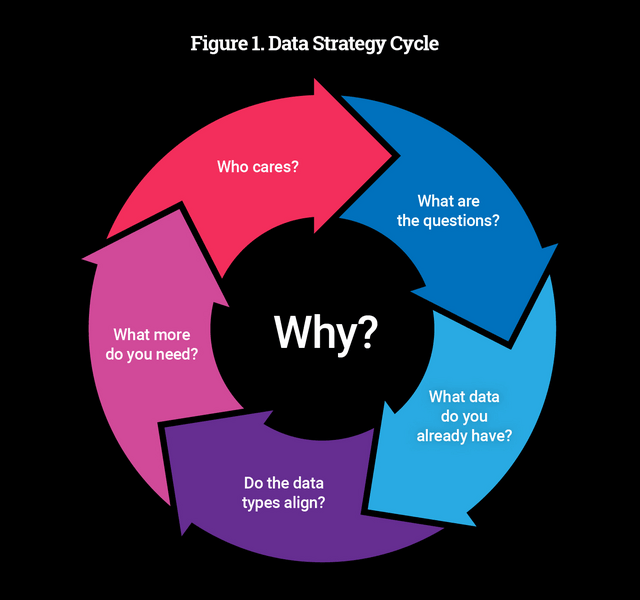
To establish a clear picture of where you are and where you need to go with your strategy, first determine why you are collecting the data.
To establish a clear picture of where you are and where you need to go with your strategy, first determine why you are collecting the data.
Content
Prove the talent development strategy's worth with the right data points.
Prove the talent development strategy's worth with the right data points.
Content
There are many different reasons to collect data, and they will be unique to each company and may not be limited to just one. For example, you may want to show the return on investment that the department brings to the organization, create a skills repository that will act as a needs analysis for the company, ask for a bigger budget, or demonstrate how the department plays a role in mitigating organizational risk.
There are many different reasons to collect data, and they will be unique to each company and may not be limited to just one. For example, you may want to show the return on investment that the department brings to the organization, create a skills repository that will act as a needs analysis for the company, ask for a bigger budget, or demonstrate how the department plays a role in mitigating organizational risk.
Who cares?
Content
Once you have a clear understanding of why you are collecting the data, identify who cares.
Once you have a clear understanding of why you are collecting the data, identify who cares.
Content
Answer that question to not only understand who supports this endeavor but to also grasp the staff capacity and capability you have to move the strategy forward. Most TD professionals are not data analysts, and not all organizations require a data analyst for the TD team.
Answer that question to not only understand who supports this endeavor but to also grasp the staff capacity and capability you have to move the strategy forward. Most TD professionals are not data analysts, and not all organizations require a data analyst for the TD team.
Content
Likewise, determine the budget. While there is much you can do with data, how far you go has associated costs.
Likewise, determine the budget. While there is much you can do with data, how far you go has associated costs.
Content
Next, identify who will receive the final data report to understand the information you need to include.
Next, identify who will receive the final data report to understand the information you need to include.
Content
What information will make them pay attention?
What information will make them pay attention?
Content
What answers will they want?
What answers will they want?
Content
How will they want the information reported?
How will they want the information reported?
Content
How frequently will they want to see the information?
How frequently will they want to see the information?
Content
Note: If the answer to the overarching question of who cares is no one, then you either need to change your data collection reason to one that others care about or take more time to gain support for this project.
Note: If the answer to the overarching question of who cares is no one, then you either need to change your data collection reason to one that others care about or take more time to gain support for this project.
What are the questions?
Content
Now determine which questions you are trying to answer through your data strategy. For example, if you are collecting data to create a skills analysis for the organization, then you may be looking to answer:
Now determine which questions you are trying to answer through your data strategy. For example, if you are collecting data to create a skills analysis for the organization, then you may be looking to answer:
Content
What skills do our current employees have?
What skills do our current employees have?
Content
What skills do we need as an organization for the future?
What skills do we need as an organization for the future?
Content
Identifying the specific questions you want to answer enables you to look at what data you need to answer those questions. That may be existing data you have or data you need to find a way to gather. Those questions will also help to keep your data collection in scope.
Identifying the specific questions you want to answer enables you to look at what data you need to answer those questions. That may be existing data you have or data you need to find a way to gather. Those questions will also help to keep your data collection in scope.
What data do you already have?
Content
As you begin to identify which organizational data will help you to build your strategy, it is important to understand the seven different types of available data and what information you can gather from them:
As you begin to identify which organizational data will help you to build your strategy, it is important to understand the seven different types of available data and what information you can gather from them:
Content
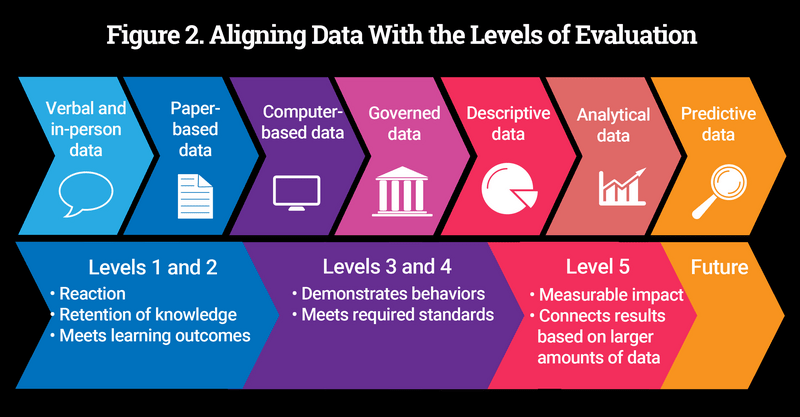
Verbal and in-person data is information captured informally or through conversations—for example, verbal feedback you receive at the end of a course. Past events and business impacts are referenced anecdotally.
Verbal and in-person data is information captured informally or through conversations—for example, verbal feedback you receive at the end of a course. Past events and business impacts are referenced anecdotally.
Content
Paper-based data is information captured on paper that you can reference but that is difficult to access and organize, such as paper feedback sheets. Paper-based data relies heavily on individual recollection.
Paper-based data is information captured on paper that you can reference but that is difficult to access and organize, such as paper feedback sheets. Paper-based data relies heavily on individual recollection.
Content
Computer-based data is information organized in a computer system, which increases the ability to access and find information, such as a survey with open comment fields.
Computer-based data is information organized in a computer system, which increases the ability to access and find information, such as a survey with open comment fields.
Content
Governed data is stored in a system with rules that dictate how, why, and when new data is created, such as a survey with questions based on a rating scale. This data is easily sortable and accessible and helps to create consistency and trust in your results.
Governed data is stored in a system with rules that dictate how, why, and when new data is created, such as a survey with questions based on a rating scale. This data is easily sortable and accessible and helps to create consistency and trust in your results.
Content
Descriptive data is governed data you use to describe past actions and events via quantifiable measures. For example, after collecting multiple months of data, you could use it to find what roles in your organization reported the most value from a specific course.
Descriptive data is governed data you use to describe past actions and events via quantifiable measures. For example, after collecting multiple months of data, you could use it to find what roles in your organization reported the most value from a specific course.
Content
Analytical data is well-controlled descriptive data you use to analyze specific events to gain a firm contextual understanding of why something happened and how it happened. Then you will be able to pinpoint exact ways to tackle an issue or challenge. For example, look at the people who didn't enjoy a course or didn't find it useful for commonalities. Is there an explanation for what differentiates certain responses or results?
Analytical data is well-controlled descriptive data you use to analyze specific events to gain a firm contextual understanding of why something happened and how it happened. Then you will be able to pinpoint exact ways to tackle an issue or challenge. For example, look at the people who didn't enjoy a course or didn't find it useful for commonalities. Is there an explanation for what differentiates certain responses or results?
Content
Predictive data helps you determine what will happen and enables you to predict and make recommendations based on the findings you have from the past. For example, if you notice that the content applicability rating correlates with higher course recommendations, you can predict that increases in content applicability will result in better recommendations.
Predictive data helps you determine what will happen and enables you to predict and make recommendations based on the findings you have from the past. For example, if you notice that the content applicability rating correlates with higher course recommendations, you can predict that increases in content applicability will result in better recommendations.
Do the data types align?
Content
When looking at the different types of data, it can be helpful to view them in alignment with the five levels of evaluation. Although they may not line up exactly, often the more basic data collection methods will help you understand the more basic evaluation needs. As you progress in your data strategy, you will need to also progress in the level of data you are acquiring.
When looking at the different types of data, it can be helpful to view them in alignment with the five levels of evaluation. Although they may not line up exactly, often the more basic data collection methods will help you understand the more basic evaluation needs. As you progress in your data strategy, you will need to also progress in the level of data you are acquiring.
Content
Make sure to understand not only what data you currently have but what type of information or analytics you will be able to gather from the data type. There is no right or wrong place to be along this spectrum; it will relate back to the other questions you have already answered.
Make sure to understand not only what data you currently have but what type of information or analytics you will be able to gather from the data type. There is no right or wrong place to be along this spectrum; it will relate back to the other questions you have already answered.
Content
It is critical to align the expectations of your results with the outcomes of the data you receive. Understanding staff capacity and capabilities, the budget, and available tools will greatly affect what you can achieve.
It is critical to align the expectations of your results with the outcomes of the data you receive. Understanding staff capacity and capabilities, the budget, and available tools will greatly affect what you can achieve.
What more do you need?
Content
The last step will be to identify what data you are still missing and how you may be able to collect that information. Look at the existing information you have and decide whether you need to progress in complexity to find the answers you are looking for.
The last step will be to identify what data you are still missing and how you may be able to collect that information. Look at the existing information you have and decide whether you need to progress in complexity to find the answers you are looking for.
Content
For example, if your goal is to proactively identify skills gaps staff need to meet the current succession plans for 2027, you will most likely require data at an analytical level. Assuming that you do not currently have that type of data, you will need to describe the steps you will take to achieve your goal, which will likely require a multiyear strategy.
For example, if your goal is to proactively identify skills gaps staff need to meet the current succession plans for 2027, you will most likely require data at an analytical level. Assuming that you do not currently have that type of data, you will need to describe the steps you will take to achieve your goal, which will likely require a multiyear strategy.
Content
You may be able to collect data on current staff skills in a governed manner, but to achieve the goal by 2027, you will need to through year two continue gathering data while also identifying skills required for specific roles in relation to succession. In year three, you can meet the final goal of identifying skills gaps that the organization must start to train staff on to meet the current succession plans.
You may be able to collect data on current staff skills in a governed manner, but to achieve the goal by 2027, you will need to through year two continue gathering data while also identifying skills required for specific roles in relation to succession. In year three, you can meet the final goal of identifying skills gaps that the organization must start to train staff on to meet the current succession plans.
Begin the data journey
Content
These six questions will give you a clear understanding of where you are in your TD data journey, and you will be able to build out your strategy to identify your stakeholders, determine appropriate timing, and include the specific measurements that will enable you to know whether your strategy is meeting your desired outcomes.
These six questions will give you a clear understanding of where you are in your TD data journey, and you will be able to build out your strategy to identify your stakeholders, determine appropriate timing, and include the specific measurements that will enable you to know whether your strategy is meeting your desired outcomes.
Content
As with any strategy, review it regularly. Expect that at the end of the reporting period you will most likely have some data that is helpful, other data that is not, and a whole new set of questions. Your TD data strategy will be ongoing and evolving, but until you get started, your strategy will take you nowhere.
As with any strategy, review it regularly. Expect that at the end of the reporting period you will most likely have some data that is helpful, other data that is not, and a whole new set of questions. Your TD data strategy will be ongoing and evolving, but until you get started, your strategy will take you nowhere.
Content
Read more from CTDO magazine : Essential talent development content for C-suite leaders.
Read more from CTDO magazine: Essential talent development content for C-suite leaders.