
CTDO Magazine Article
How Much Do You Value Learning?
Content
A workplace culture of learning benefits both employees and organizations.
A workplace culture of learning benefits both employees and organizations.
Fri Jan 14 2022

Content
Organizations with learning cultures are more likely to realize positive business results, according to Developing a Culture of Learning: Strategies for Organizational Achievement , a new research report from the Association for Talent Development that Schoox sponsored. ATD defines a culture of learning as "an organizational culture in which employees continuously seek, share, and apply new knowledge and skills to improve individual and organizational performance."
Organizations with learning cultures are more likely to realize positive business results, according to Developing a Culture of Learning: Strategies for Organizational Achievement, a new research report from the Association for Talent Development that Schoox sponsored. ATD defines a culture of learning as "an organizational culture in which employees continuously seek, share, and apply new knowledge and skills to improve individual and organizational performance."
Content
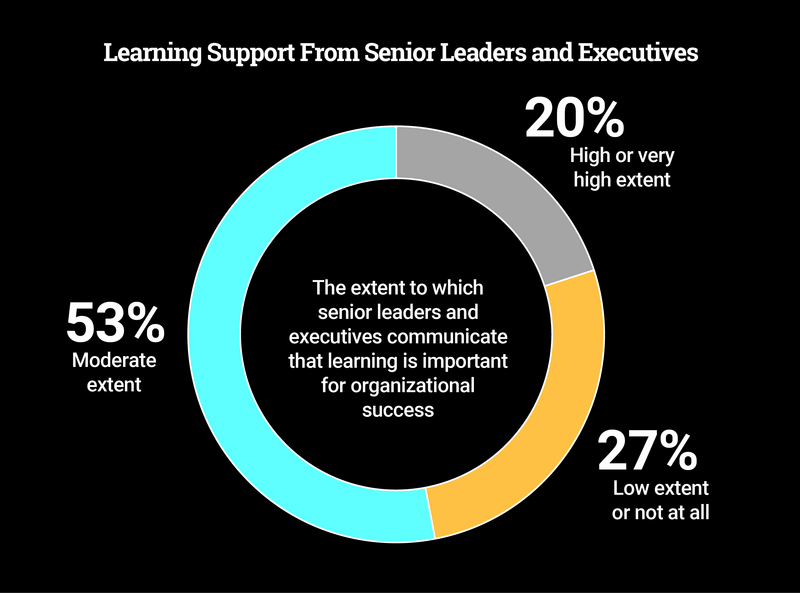
ATD surveyed talent development professionals from 304 organizations and found that when senior leaders communicated the importance of learning to a high or very high extent, their organizations tended to be high performers.
ATD surveyed talent development professionals from 304 organizations and found that when senior leaders communicated the importance of learning to a high or very high extent, their organizations tended to be high performers.
Content
The report likewise found that businesses whose senior leaders communicated the importance of learning to a low extent or not at all are significantly less likely to be high performers.
The report likewise found that businesses whose senior leaders communicated the importance of learning to a low extent or not at all are significantly less likely to be high performers.
Content
Additionally, companies with a formal head of talent development, regardless of whether that person was a member of the senior leader or executive team, were significantly more likely to be high performers.
Additionally, companies with a formal head of talent development, regardless of whether that person was a member of the senior leader or executive team, were significantly more likely to be high performers.
Content
About three-quarters of responding organizations have a formal head of talent development or learning. At 34 percent of responding organizations, that person was a member of the senior leadership or executive team.
About three-quarters of responding organizations have a formal head of talent development or learning. At 34 percent of responding organizations, that person was a member of the senior leadership or executive team.
Content
"Research shows that having an individual accountable for talent development can help drive alignment between learning goals and business goals, meaning learning is more likely to be applied so it drives organizational performance," the report calls out.
"Research shows that having an individual accountable for talent development can help drive alignment between learning goals and business goals, meaning learning is more likely to be applied so it drives organizational performance," the report calls out.
Content
"The research found that, on average, high-performing organizations reported their talent development staff had higher proficiency across four areas—training delivery, instructional design, learning technology application, and evaluating learning impact—than lower-performing organizations."
"The research found that, on average, high-performing organizations reported their talent development staff had higher proficiency across four areas—training delivery, instructional design, learning technology application, and evaluating learning impact—than lower-performing organizations."
Content
Source: Developing a Culture of Learning: Strategies for Organizational Achievement, Association for Talent Development, 2021
Source: Developing a Culture of Learning: Strategies for Organizational Achievement, Association for Talent Development, 2021
Fit in learning
Content
The report acknowledges, though, that "Making time for learning, particularly nonrequired learning, is a challenge." One survey respondent explains, "Our employees are overworked and understaffed, so making time for professional development is more of a dream than a reality."
The report acknowledges, though, that "Making time for learning, particularly nonrequired learning, is a challenge." One survey respondent explains, "Our employees are overworked and understaffed, so making time for professional development is more of a dream than a reality."
Content
Still, more than half of the surveyed organizations give employees the opportunity to do nonrequired learning without using vacation or taking unpaid time off. Tuition benefits are also a primary way employers help employees pay for nonrequired learning. At 55 percent of organizations, tuition benefits were available to all workers.
Still, more than half of the surveyed organizations give employees the opportunity to do nonrequired learning without using vacation or taking unpaid time off. Tuition benefits are also a primary way employers help employees pay for nonrequired learning. At 55 percent of organizations, tuition benefits were available to all workers.
Content
According to the report, along with executive and manager support for learning, talent development leaders need to personalize development programs and create career paths to communicate the value of learning programs. They also need to model a culture of learning, seeking opportunities for their own professional development.
According to the report, along with executive and manager support for learning, talent development leaders need to personalize development programs and create career paths to communicate the value of learning programs. They also need to model a culture of learning, seeking opportunities for their own professional development.
Content
Read more from CTDO magazine : Essential talent development content for C-suite leaders.
Read more from CTDO magazine: Essential talent development content for C-suite leaders.
View Courses Recommended for You