
Talent Development Leader
Amplifying Earn-and-Learn Programs
Content
Can apprenticeships bridge talent gaps for skilled trades?
Can apprenticeships bridge talent gaps for skilled trades?
Fri Sep 19 2025
Content
The US construction industry faces a historic skilled labor shortage. According to the Associated Builders and Contractors , builders need to recruit 439,000 new workers in 2025, and that figure could climb to nearly 500,000 in 2026.
The US construction industry faces a historic skilled labor shortage. According to the Associated Builders and Contractors, builders need to recruit 439,000 new workers in 2025, and that figure could climb to nearly 500,000 in 2026.
Content
The construction industry isn’t alone. The US Bureau of Labor Statistics reports the top trades with significant job openings are electricians, plumbers and pipefitters, HVAC technicians, and welders.
The construction industry isn’t alone. The US Bureau of Labor Statistics reports the top trades with significant job openings are electricians, plumbers and pipefitters, HVAC technicians, and welders.
Content
Recently, the Harris Poll’s Corporate Strategy and Reputation Practice surveyed US adults to explore how companies can better support workers looking to enter those professions. Nine in 10 respondents agree that trade jobs are just as important to society as white-collar jobs, but almost as many (86 percent) believe that educators are overlooking skilled-trade careers in schools today.
Recently, the Harris Poll’s Corporate Strategy and Reputation Practice surveyed US adults to explore how companies can better support workers looking to enter those professions. Nine in 10 respondents agree that trade jobs are just as important to society as white-collar jobs, but almost as many (86 percent) believe that educators are overlooking skilled-trade careers in schools today.
Content
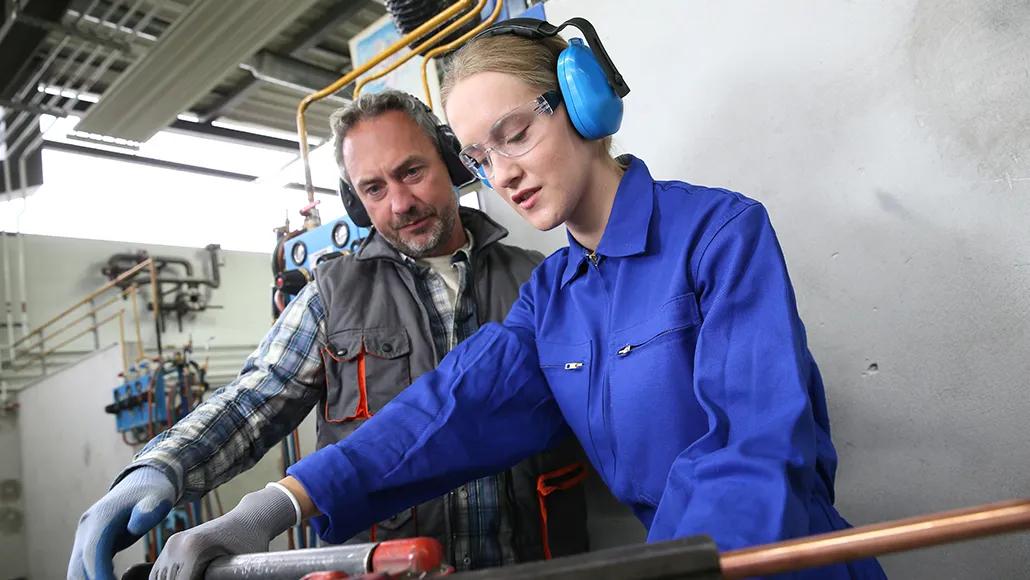
Enter apprenticeships. A report released by the Government Accountability Office, Apprenticeship: Earn-And-Learn Opportunities Can Benefit Workers and Employers, notes that apprenticeships “can give individuals a mix of work experience and instruction on in-demand skills—while they earn a wage.”
Enter apprenticeships. A report released by the Government Accountability Office, Apprenticeship: Earn-And-Learn Opportunities Can Benefit Workers and Employers, notes that apprenticeships “can give individuals a mix of work experience and instruction on in-demand skills—while they earn a wage.”
Content
Specifically, the GAO report examines Registered Apprenticeship Programs (RAPs), which are industry-driven pathways that help employers develop their future workforce while individuals obtain paid work experience with a mentor; classroom instruction; and a portable, nationally recognized credential.
Specifically, the GAO report examines Registered Apprenticeship Programs (RAPs), which are industry-driven pathways that help employers develop their future workforce while individuals obtain paid work experience with a mentor; classroom instruction; and a portable, nationally recognized credential.
Content
In June, the US Department of Labor announced the award of nearly $84 million in grants to 50 states and territories to increase the capacity of RAPs. “Registered apprenticeships are a vital tool for skills development, national economic competitiveness, business growth, and individual opportunity,” says US Labor Secretary Lori Chavez-DeRemer.
In June, the US Department of Labor announced the award of nearly $84 million in grants to 50 states and territories to increase the capacity of RAPs. “Registered apprenticeships are a vital tool for skills development, national economic competitiveness, business growth, and individual opportunity,” says US Labor Secretary Lori Chavez-DeRemer.
Content
States are also increasing their support of apprenticeship programs. Virginia announced in July that it was awarding more than $1 million in grants to boost apprenticeships and other upskilling initiatives. For example, Capital Area Workforce Development Board received $100,000 to expand RAPs and on-the-job training for building and manufacturing trades; Tidewater Community College received $150,000 to create a 12-month RAP (144 hours of industry-related technical instruction and 2,000 hours of on-the-job training); and the Virginia Manufacturers Association received $150,000 for a RAP that focuses on careers in advanced manufacturing, machinists, maintenance technicians, and chemical operators.
States are also increasing their support of apprenticeship programs. Virginia announced in July that it was awarding more than $1 million in grants to boost apprenticeships and other upskilling initiatives. For example, Capital Area Workforce Development Board received $100,000 to expand RAPs and on-the-job training for building and manufacturing trades; Tidewater Community College received $150,000 to create a 12-month RAP (144 hours of industry-related technical instruction and 2,000 hours of on-the-job training); and the Virginia Manufacturers Association received $150,000 for a RAP that focuses on careers in advanced manufacturing, machinists, maintenance technicians, and chemical operators.
Content
Virginia Works, the Commonwealth of Virginia’s workforce development agency, is administering the grants and helping oversee the programs. “Apprenticeship is proven as an earn-while-you-learn method for individuals,” states Nicole Overley, commissioner of Virginia Works.
Virginia Works, the Commonwealth of Virginia’s workforce development agency, is administering the grants and helping oversee the programs. “Apprenticeship is proven as an earn-while-you-learn method for individuals,” states Nicole Overley, commissioner of Virginia Works.
Content
She adds that RAPs also provide benefits to employers: “Culture, retention, even innovation are proven to increase for employers who run apprenticeship programs.”
She adds that RAPs also provide benefits to employers: “Culture, retention, even innovation are proven to increase for employers who run apprenticeship programs.”
Content
Similarly, California’s new car dealers are tapping apprenticeships to recruit and develop individuals seeking careers as automotive service technicians. A recent survey by the California New Car Dealers Association (CNCDA) reveals that there is a statewide shortage of 5,000 technicians, so the CNCDA Foundation is partnering with Automotive Apprenticeship Group to roll out a two-year apprenticeship program with several local dealerships. Upon program completion, the apprentices earn a national certification from the US Department of Labor.
Similarly, California’s new car dealers are tapping apprenticeships to recruit and develop individuals seeking careers as automotive service technicians. A recent survey by the California New Car Dealers Association (CNCDA) reveals that there is a statewide shortage of 5,000 technicians, so the CNCDA Foundation is partnering with Automotive Apprenticeship Group to roll out a two-year apprenticeship program with several local dealerships. Upon program completion, the apprentices earn a national certification from the US Department of Labor.
Content
Kim McPhaul, president of the CNCDA Foundation, explains that the apprenticeship program “will connect career-minded people—such as recent high school graduates or those currently working in unrewarding jobs—with opportunity to work in a field where motivated, skilled people are sorely needed.”
Kim McPhaul, president of the CNCDA Foundation, explains that the apprenticeship program “will connect career-minded people—such as recent high school graduates or those currently working in unrewarding jobs—with opportunity to work in a field where motivated, skilled people are sorely needed.”
Content
Read more from Talent Development Leader.