
Talent Development Leader
Be Bold, Be Flexible
Training managers on the basics and launching a strategic onboarding program ensure Cox Automotive reaches its employees where they are.
Fri Oct 31 2025
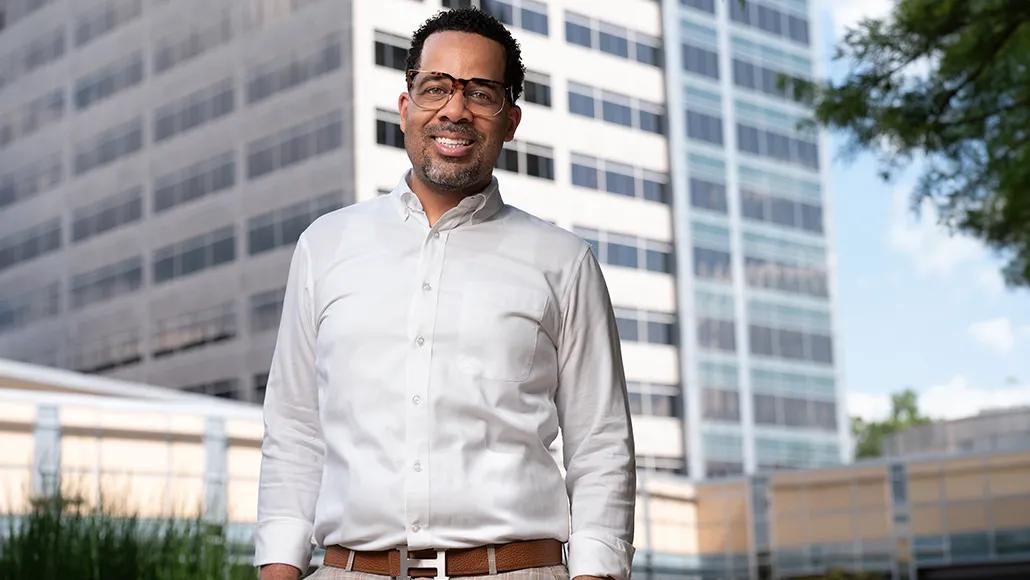
Cox Automotive is “seeing a growing need for adaptive leadership, enhanced data fluency, and cross-functional agility,” says Matthew Harrison, who leads the company’s talent, learning, and organizational effectiveness (TLOE) function.
With more than 29,000 employees working on five continents, Cox Automotive offers solutions for various aspects of the automotive life cycle, including digital marketing, financial services, retail operations, wholesale solutions, and maintenance and repair.
“Keeping in mind our varied employee base, we need to stay focused on building a learner experience that meets the competency needs of the individual contributor, supervisor, and senior levels,” he says.
Equip managers with the fundamentals
Rather than technical or function-specific training, TLOE focuses on soft skills training for the company’s entire workforce. Harrison’s team creates and delivers learning programs that ensure people in leadership positions understand how to build and guide their teams.
“A leader’s ability to do that role effectively is highly contingent on how well we prepare them. Oftentimes, people are promoted because of their subject matter expertise, not necessarily because they’re going to be a good people leader,” says Harrison.
However, he notes that most of their programs were “overly focused on leadership skills, with little coverage of managerial skills. These aren’t exactly the same thing.”
To bridge that gap, TLOE launched the Manager Essentials program, which homes in on issues around how to communicate effectively and deliver feedback, coach team members and manage expectations, and perform nuanced tactical duties such as conducting a performance review.
“We went back to the basics,” Harrison explains. “If someone is new to the organization or being promoted to a management role for the first time, what core tasks do they need to know to effectively manage their teams?”
While some organizations often assume that someone will simply learn along the way, Harrison believes that approach “ends up being problematic for not only the leader themselves but even more so for their team members.”
Since the program’s launch, the organization has realized statistically significant increases in retention rates of participants’ team members and improved engagement scores. As of spring 2025, Cox Automotive achieved a 98 percent retention rate among program participants. What’s more, the organization retained nearly 70 percent of participants' direct reports.
Get comfortable with gray areas
TLOE launched Building Outstanding Leadership Dynamics (BOLD), a six-month program that prepares managers for the highest ranks of senior leadership, in Q1 2025 with a pilot cohort of 16 leaders.
TLOE received feedback that many senior directors were “struggling with understanding and being comfortable with the gray areas of leadership. They needed things to be very black and white in order for them to be effective,” Harrison shares.
“We intentionally designed the BOLD program with components that are intentionally nebulous,” he explains. “The goal is to get participants more comfortable with ambiguity, with not being told exactly how to approach and manage a situation because, as a leader, these are the types of experiences that you’re going to have to navigate effectively.”
Imagine that a senior leader has a direct report who exceeds performance quarter over quarter but also has behavioral characteristics that disrupt the team’s dynamics. The person dominates meetings, dismisses co-workers’ ideas, and creates tension within cross-functional teams.
In that situation, “the black-and-white approach might suggest that the leader focuses on the fact that the employee is hitting their numbers. But examining the gray area means asking deeper questions,” states Harrison. “What is the potential long-term impact of this person’s behavior on overall team cohesion and productivity? How can this leader still create psychological safety within their team? How do they balance individual performance effectively while also meeting the core values of the organization?”
In such a scenario, “it’s not about having to choose performance or culture but about the importance of integrating both,” Harrison explains.
He stresses that although such circumstances are tough, almost every leader faces them at some point in their career. The BOLD program uses similar case studies because “we want to give them the tools to manage the gray areas in a way that benefits everyone.”
Calibrate onboarding to key moments
Cox Automotive did not always make clear the differences between new-hire orientation and onboarding. Because of the organization’s dispersed and varied workforce, a one-size-fits-all approach to onboarding was not working. Enter Full Circuit, which provides new hires with resources during key moments of need.
“When you think of typical onboarding programs, they often bombard employees with information and resources the first week, sharing everything from how to complete your time sheet to giving an overview of the company’s employee resource groups. It’s too much information,” asserts Harrison.
Instead, the TLOE team assessed when workers would best benefit from specific materials and recalibrated the flow of onboarding information and interactions.
For example, the team found that rolling out information about employee resource groups later in the process provided an advantage. “About five months in, employees are likely comfortable with their tasks and have learned a bit about the organization,” Harrison says. “Now, they can start to deepen their social ties within the company.”
The new onboarding program also has different pathways based on each person’s role. For instance, technicians and other employees working in the field don’t have access to a computer. For those workers, TLOE developed a 90-minute experience called the Digital Employee Experience Playbook that users can access via their phones when it is more convenient and meaningful to them.
Similarly, an onboarding pathway for people leaders new to the company pushes resources and links to leadership development programming such as registration opportunities for the Manager Essentials program.
TLOE uses information gleaned from the company’s human capital management system to assist with developing pathways for individual contributors and scheduling the communication rollout.
“We send an introductory email that explains which pathway makes the most sense for them. While some portions of the program are mandatory, we also include content, activities, and resources that are voluntary,” Harrison shares. “We leave it up to the employee to choose what to access.”
Another advantage to the onboarding approach is that employees can “jump in and out of the onboarding process at any time that they want.” Harrison describes a scenario in which a new employee participates heavily in onboarding during their first three months but then stops accessing resources. At a later date, the individual can reconnect and start with resources for the fourth month.
“The intentionality behind the tailored pathways and timing of when we’re offering information and access to resources differentiates our approach from a typical onboarding program,” Harrison says. “This sort of onboarding represents how we’re trying to prepare for a space where learning is more continuous, more personalized, and really embedded in the flow of work.”
View Courses Recommended for You