
Talent Development Leader
Enable Learning and Leadership to Evolve
Content
Lenovo embraces reinvention and consistency to build a high-performing workforce.
Lenovo embraces reinvention and consistency to build a high-performing workforce.
Tue Apr 28 2026

Content
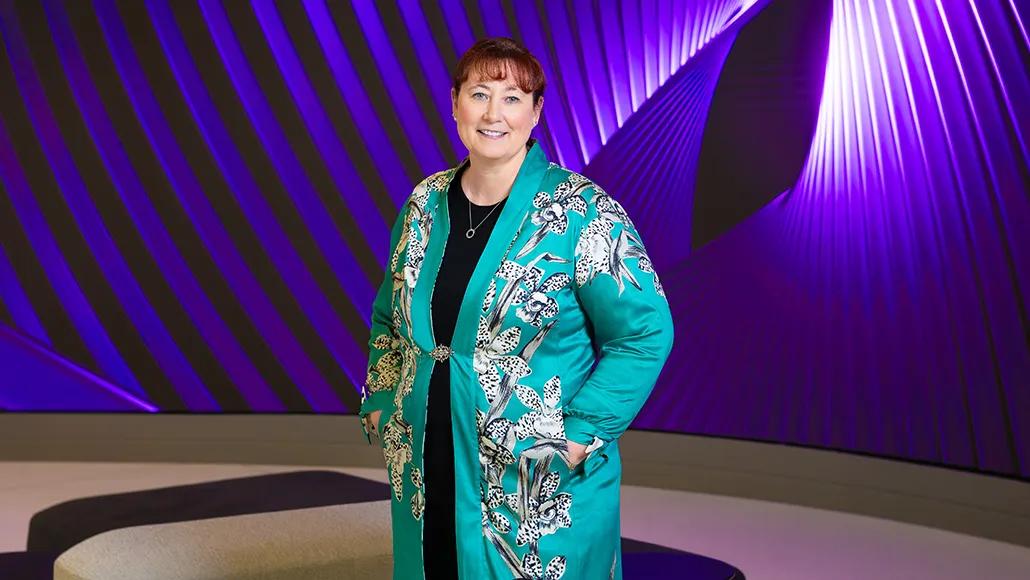
“Our biggest challenge is keeping pace with the speed of change,” says Emma Engel, director of global learning for Lenovo.
“Our biggest challenge is keeping pace with the speed of change,” says Emma Engel, director of global learning for Lenovo.
Content
Lenovo employs about 75,000 software engineers, data scientists, commercial teams, and frontline workers. Known historically as a PC manufacturer, Lenovo has expanded into artificial-intelligence‑enabled devices, intelligent infrastructure, and cloud and edge solutions and services, supporting customers in more than 180 markets worldwide and enabling intelligent transformation at scale.
Lenovo employs about 75,000 software engineers, data scientists, commercial teams, and frontline workers. Known historically as a PC manufacturer, Lenovo has expanded into artificial-intelligence‑enabled devices, intelligent infrastructure, and cloud and edge solutions and services, supporting customers in more than 180 markets worldwide and enabling intelligent transformation at scale.
Content
“Technology and customer expectations are evolving rapidly, so we focus our efforts on building human skills like leadership, adaptability, collaboration, and influence,” Engel explains. “For us, these are the most crucial needs.”
“Technology and customer expectations are evolving rapidly, so we focus our efforts on building human skills like leadership, adaptability, collaboration, and influence,” Engel explains. “For us, these are the most crucial needs.”
Pair perennial skills with new priorities
Content
Engel leads a small team of nine people, referred to internally as the Global Learning Center (GLC). They oversee the global learning management system called Grow@Lenovo and learning solutions focused on leadership and management development, what Engel calls “critical human capabilities,” for the company's workforce worldwide. In addition, they manage general professional development programs, compliance training, and courseware that supports technical skills and certifications around topics such as AI, cloud management, and data security for the company's North and Latin America workforce, which totals approximately 43,000 employees.
Engel leads a small team of nine people, referred to internally as the Global Learning Center (GLC). They oversee the global learning management system called Grow@Lenovo and learning solutions focused on leadership and management development, what Engel calls “critical human capabilities,” for the company's workforce worldwide. In addition, they manage general professional development programs, compliance training, and courseware that supports technical skills and certifications around topics such as AI, cloud management, and data security for the company's North and Latin America workforce, which totals approximately 43,000 employees.
Content
For example, to foster change management skills, the GLC team, in collaboration with the Global Change Management Center of Excellence, developed a program called Thriving in the Change Tornado. In addition, there’s the Collaborating Across Cultures program for teams that must regularly work together across geographies, time zones, and cultures every day.
For example, to foster change management skills, the GLC team, in collaboration with the Global Change Management Center of Excellence, developed a program called Thriving in the Change Tornado. In addition, there’s the Collaborating Across Cultures program for teams that must regularly work together across geographies, time zones, and cultures every day.
Content
Engel explains that her team conducts Level 3 surveys prior to and six months after each course to measure behavior change. It also assesses all feedback on a quarterly basis and makes small tweaks to courses and learning assets throughout the year. At the end of every year, they perform thorough evaluations of its deliverables and revises existing content or swaps out individual programs altogether for more relevant options.
Engel explains that her team conducts Level 3 surveys prior to and six months after each course to measure behavior change. It also assesses all feedback on a quarterly basis and makes small tweaks to courses and learning assets throughout the year. At the end of every year, they perform thorough evaluations of its deliverables and revises existing content or swaps out individual programs altogether for more relevant options.
Content
Case in point: After pinpointing a gap in its leadership development catalog, the GLC launched a new offering for director-level employees called Leadership Advancing Transformation, in partnership with Columbia Business School.
Case in point: After pinpointing a gap in its leadership development catalog, the GLC launched a new offering for director-level employees called Leadership Advancing Transformation, in partnership with Columbia Business School.
Content
The program runs three times per year for cohorts of 30. It covers a wide range of emerging issues such as nurturing innovation, addressing geopolitical challenges, and harnessing robotics and AI. The experience wraps with a segment on leadership lessons from jazz music.
The program runs three times per year for cohorts of 30. It covers a wide range of emerging issues such as nurturing innovation, addressing geopolitical challenges, and harnessing robotics and AI. The experience wraps with a segment on leadership lessons from jazz music.
Content
“This might seem odd, but jazz musicians play with different people every evening, and there is typically no set music, so they’re constantly innovating. When one musician steps forward to improv, the rest of the band plays backup,” notes Engel. “We believe that’s the evolution of leadership. If you’re really seeking the genius in your team, you need to be willing to let different people step forward at times and encourage the rest of the team to support them.”
“This might seem odd, but jazz musicians play with different people every evening, and there is typically no set music, so they’re constantly innovating. When one musician steps forward to improv, the rest of the band plays backup,” notes Engel. “We believe that’s the evolution of leadership. If you’re really seeking the genius in your team, you need to be willing to let different people step forward at times and encourage the rest of the team to support them.”
Content
What’s more, each year—as part of the Le-Grow Pro initiative—the GLC team identifies 10 professional skills it predicts will be a priority for the coming 12 months. To craft the list, the team scours insights from industry sources such as the World Economic Forum, as well as input from internal business leaders and HR partners about long-term and immediate talent gaps.
What’s more, each year—as part of the Le-Grow Pro initiative—the GLC team identifies 10 professional skills it predicts will be a priority for the coming 12 months. To craft the list, the team scours insights from industry sources such as the World Economic Forum, as well as input from internal business leaders and HR partners about long-term and immediate talent gaps.
Content
The GLC typically only refreshes the list with three new skills, while other skills remain constant requirements. According to Engel, “Some skills, like business acumen and project management, are more enduring. Then there’s a short list of topics that bubble up, like AI or how to manage uncertainty.”
The GLC typically only refreshes the list with three new skills, while other skills remain constant requirements. According to Engel, “Some skills, like business acumen and project management, are more enduring. Then there’s a short list of topics that bubble up, like AI or how to manage uncertainty.”
Content
To address those needs, Engel and her team augment and update existing Le-Grow Pro programs with new learning assets, source new programs from content partners, and create focused 90-minute webinars and half-day to one-day workshops. For example, a major focus for 2026 is enabling leaders to embrace the confluence of AI, ambiguity, and constant reinvention, so the GLC is rolling out a Questioning with Critical Thinking program, an initiative that explores how to pair critical thinking skills with AI prompt engineering, followed by a discussion on how to question the results generative AI tools produce.
To address those needs, Engel and her team augment and update existing Le-Grow Pro programs with new learning assets, source new programs from content partners, and create focused 90-minute webinars and half-day to one-day workshops. For example, a major focus for 2026 is enabling leaders to embrace the confluence of AI, ambiguity, and constant reinvention, so the GLC is rolling out a Questioning with Critical Thinking program, an initiative that explores how to pair critical thinking skills with AI prompt engineering, followed by a discussion on how to question the results generative AI tools produce.
Cultivate consistency
Content
Engel notes that the GLC team also is responsible for the global standardization of Lenovo’s leadership and management programs, and it delivers 15 different core leadership and management development programs.
Engel notes that the GLC team also is responsible for the global standardization of Lenovo’s leadership and management programs, and it delivers 15 different core leadership and management development programs.
Content
“For every single career progression step you take, we have a leadership development program that gives you the skills you need to transition,” Engel explains.
“For every single career progression step you take, we have a leadership development program that gives you the skills you need to transition,” Engel explains.
Content
For instance, there are programs geared for staff who are ready to move into first-time manager roles, as well as development for senior director and vice president levels. Additionally, the GLC offers programs for project managers and thought leaders among the company’s technical ranks who may not have a formal manager role but are still leading teams.
For instance, there are programs geared for staff who are ready to move into first-time manager roles, as well as development for senior director and vice president levels. Additionally, the GLC offers programs for project managers and thought leaders among the company’s technical ranks who may not have a formal manager role but are still leading teams.
Content
“We can have a global team with three first-time managers. One is based in the US, one in Bratislava [Slovakia], and one in Japan. We need to ensure that each one of them learns the same skills and knowledge, and that when they return to their positions after training, their manager can trust and believe that they have all received the same development experience,” states Engel.
“We can have a global team with three first-time managers. One is based in the US, one in Bratislava [Slovakia], and one in Japan. We need to ensure that each one of them learns the same skills and knowledge, and that when they return to their positions after training, their manager can trust and believe that they have all received the same development experience,” states Engel.
Content
To better embed leadership skills throughout Lenovo’s workforce, Engel and her team embarked on a mission to make coaching with impact a part of the company’s culture.
To better embed leadership skills throughout Lenovo’s workforce, Engel and her team embarked on a mission to make coaching with impact a part of the company’s culture.
Content
“There was a historical culture of leaders who felt like their role is to tell people how to do things. But we want a more collaborative and entrepreneurial culture,” says Engel. “We’ve got smart people on our teams, and we want to harness their intelligence and knowledge. We believe we can do that by building a coaching culture.”
“There was a historical culture of leaders who felt like their role is to tell people how to do things. But we want a more collaborative and entrepreneurial culture,” says Engel. “We’ve got smart people on our teams, and we want to harness their intelligence and knowledge. We believe we can do that by building a coaching culture.”
Content
The GLC team started its journey by partnering with an external provider with an eight-step coaching model. Unfortunately, after running the program three times, the team noticed that participants didn’t feel confident in their coaching skills, and there was no evidence of behavior change.
The GLC team started its journey by partnering with an external provider with an eight-step coaching model. Unfortunately, after running the program three times, the team noticed that participants didn’t feel confident in their coaching skills, and there was no evidence of behavior change.
Content
“We could not get good results. At the end of every session, we would ask, ‘Do you feel like you’re ready to go out and coach people?’ The response was an overwhelming no. They would tell us that the process was complicated and took too much time,” she discloses.
“We could not get good results. At the end of every session, we would ask, ‘Do you feel like you’re ready to go out and coach people?’ The response was an overwhelming no. They would tell us that the process was complicated and took too much time,” she discloses.
Content
Even though the company had invested a lot of money and time, GLC team members admitted that the approach wasn’t working. “We realized we’d been too smart for ourselves. We had overcomplicated the whole thing,” Engel says.
Even though the company had invested a lot of money and time, GLC team members admitted that the approach wasn’t working. “We realized we’d been too smart for ourselves. We had overcomplicated the whole thing,” Engel says.
Content
So, Engel and her team took a step back to redefine the skills and mindset Lenovo needed. Then, they sourced a simpler program that instructed participants on a four-step coaching framework they could apply during an informal 10-minute conversation or a one-hour career development session. The program also sought to highlight certain leader behaviors that were limiting their effectiveness as coaches.
So, Engel and her team took a step back to redefine the skills and mindset Lenovo needed. Then, they sourced a simpler program that instructed participants on a four-step coaching framework they could apply during an informal 10-minute conversation or a one-hour career development session. The program also sought to highlight certain leader behaviors that were limiting their effectiveness as coaches.
Content
After delivering the first program, it was clear that starting over was the right decision. “Now, when we ask them if [they] think they can coach someone, the answer is a definite ‘yes, ready now,’” Engel states.
After delivering the first program, it was clear that starting over was the right decision. “Now, when we ask them if [they] think they can coach someone, the answer is a definite ‘yes, ready now,’” Engel states.
Content
“It’s not as much about the framework we teach as it is in the consistency of delivering coaching,” she adds. “If a manager is implementing this type of coaching consistently, it will reach a point where the whole team is familiar with the framework and will even anticipate the manager’s usage of the framework in one-on-ones. That means we’re embedding coaching across the organization.”
“It’s not as much about the framework we teach as it is in the consistency of delivering coaching,” she adds. “If a manager is implementing this type of coaching consistently, it will reach a point where the whole team is familiar with the framework and will even anticipate the manager’s usage of the framework in one-on-ones. That means we’re embedding coaching across the organization.”
Content
In fact, according to Engel, the role of her team is to simplify learning and make it so natural and accessible that employees can easily implement knowledge and behaviors in their day-to-day responsibilities.
In fact, according to Engel, the role of her team is to simplify learning and make it so natural and accessible that employees can easily implement knowledge and behaviors in their day-to-day responsibilities.
Content
“[Staff] don't feel like what they’re learning is a new task they have to perform on top of everything they already do, so they can implement behaviors consistently,” Engel explains. “People around them will see their example, and that’s how we change the culture to one of continuous learning.”
“[Staff] don't feel like what they’re learning is a new task they have to perform on top of everything they already do, so they can implement behaviors consistently,” Engel explains. “People around them will see their example, and that’s how we change the culture to one of continuous learning.”
Become a partner that proves value
Content
While not the case at Lenovo, Engel acknowledges that many organizations view learning as an expense. She notes that for much of her career, she focused on trying to balance costs, concentrating efforts on how to make training cheaper. To move beyond that perception, Engel believes talent development professionals must embrace their role as business partners.
While not the case at Lenovo, Engel acknowledges that many organizations view learning as an expense. She notes that for much of her career, she focused on trying to balance costs, concentrating efforts on how to make training cheaper. To move beyond that perception, Engel believes talent development professionals must embrace their role as business partners.
Content
“Historically, learning was an add-on. But today, learning needs to be linked to business transformation,” she says.
“Historically, learning was an add-on. But today, learning needs to be linked to business transformation,” she says.
Content
Engel imparts a conversation with a colleague who said she felt like she was working on the other side of a fence as her employees and stakeholders. People would throw requirements over, and the colleague would build a training program, throw it back over the fence, and hope for the best.
Engel imparts a conversation with a colleague who said she felt like she was working on the other side of a fence as her employees and stakeholders. People would throw requirements over, and the colleague would build a training program, throw it back over the fence, and hope for the best.
Content
“I remember thinking that we’ve got to change that. At the very least, we’ve got to get on the other side of the fence so we can be part of the garden party,” explains Engel. “If we’re just providing the end state, we’re not really bringing the knowledge that we have around adult learning and the way people think and work. We’re just taking orders.”
“I remember thinking that we’ve got to change that. At the very least, we’ve got to get on the other side of the fence so we can be part of the garden party,” explains Engel. “If we’re just providing the end state, we’re not really bringing the knowledge that we have around adult learning and the way people think and work. We’re just taking orders.”
Content
To demonstrate her point, Engel shares a recent example when the organization changed some pricing structures. The stakeholders invited her to the conversation early because they understood the business would need a mindset change.
To demonstrate her point, Engel shares a recent example when the organization changed some pricing structures. The stakeholders invited her to the conversation early because they understood the business would need a mindset change.
Content
“It was a significant transformation project, and we knew people would need new information. But what about new skills—and not only technical skills, but also leadership, collaboration, and communication? That invite was a sign that there’s a real evolution in how leaders think about learning.”
“It was a significant transformation project, and we knew people would need new information. But what about new skills—and not only technical skills, but also leadership, collaboration, and communication? That invite was a sign that there’s a real evolution in how leaders think about learning.”
Content
To become an effective business partner, Engel has found ways to embed GLC team members into the business, and she contends that process starts with research and preparation and bringing TD expertise to the table.
To become an effective business partner, Engel has found ways to embed GLC team members into the business, and she contends that process starts with research and preparation and bringing TD expertise to the table.
Content
“Every meeting you come to, you need to bring something to the conversation. You need to have done your research. Don’t come expecting to take an order. Come with an opinion, come with questions. Be prepared to add value to the discussion,” she advises.
“Every meeting you come to, you need to bring something to the conversation. You need to have done your research. Don’t come expecting to take an order. Come with an opinion, come with questions. Be prepared to add value to the discussion,” she advises.
Content
For example, when a line of business comes to the GLC and requests a two-hour time management course, Engel responds with, “What is the business problem you’re trying to solve with that training?”
For example, when a line of business comes to the GLC and requests a two-hour time management course, Engel responds with, “What is the business problem you’re trying to solve with that training?”
Content
She adds: “Don’t start the conversation by asking questions about the number of participants or preferences around virtual or live delivery. Ask questions that clarify the business goals. Ask what will happen if the business fails to achieve those goals. Ask about desired behaviors.”
She adds: “Don’t start the conversation by asking questions about the number of participants or preferences around virtual or live delivery. Ask questions that clarify the business goals. Ask what will happen if the business fails to achieve those goals. Ask about desired behaviors.”
Content
Engel admits that she has been confronted by a few leaders who say, “Don’t ask so many questions. Can you just build the training?” But she argues that it’s her mandate to stand firm and say, “No, because I’m not really sure training is the right option. And before we waste your team’s time, let’s first figure out what is actually going to deliver the impact you’re looking for. Now, help me understand what that impact is.”
Engel admits that she has been confronted by a few leaders who say, “Don’t ask so many questions. Can you just build the training?” But she argues that it’s her mandate to stand firm and say, “No, because I’m not really sure training is the right option. And before we waste your team’s time, let’s first figure out what is actually going to deliver the impact you’re looking for. Now, help me understand what that impact is.”
Content
To equip GLC team members with the skills they need to be effective business partners, they receive consulting conversations training. Engel also supplies them with a template to use during discussions that outlines basic questions around people, resources, and timing, as well as deeper questions that home in on business results. In addition, before any major meeting, she confers with her team members to discuss the research and prep work they’ve completed and what ideas they plan to present.
To equip GLC team members with the skills they need to be effective business partners, they receive consulting conversations training. Engel also supplies them with a template to use during discussions that outlines basic questions around people, resources, and timing, as well as deeper questions that home in on business results. In addition, before any major meeting, she confers with her team members to discuss the research and prep work they’ve completed and what ideas they plan to present.
Content
“We have a combination of training, coaching, and checklists for our consulting practice, which is what we preach for everybody,” says Engel.
“We have a combination of training, coaching, and checklists for our consulting practice, which is what we preach for everybody,” says Engel.
Content
Those types of conversations demonstrate to stakeholders that the GLC team understands how learning can have an impact on the business.
Those types of conversations demonstrate to stakeholders that the GLC team understands how learning can have an impact on the business.
Content
“The right discussions lead to solutions that deliver real results that drive the business forward,” Engel adds. “That gets us invited back. That’s how we add value. That’s how we change the culture to see learning as an investment now and in the future.”
“The right discussions lead to solutions that deliver real results that drive the business forward,” Engel adds. “That gets us invited back. That’s how we add value. That’s how we change the culture to see learning as an investment now and in the future.”
Content
Read more from Talent Development Leader .