
Talent Development Leader
Healthy Talent Development
Content
At Sentara, the talent and learning function focuses on collaboration, business impact, and culture to create a thriving workforce.
At Sentara, the talent and learning function focuses on collaboration, business impact, and culture to create a thriving workforce.
Sat Feb 14 2026
Content
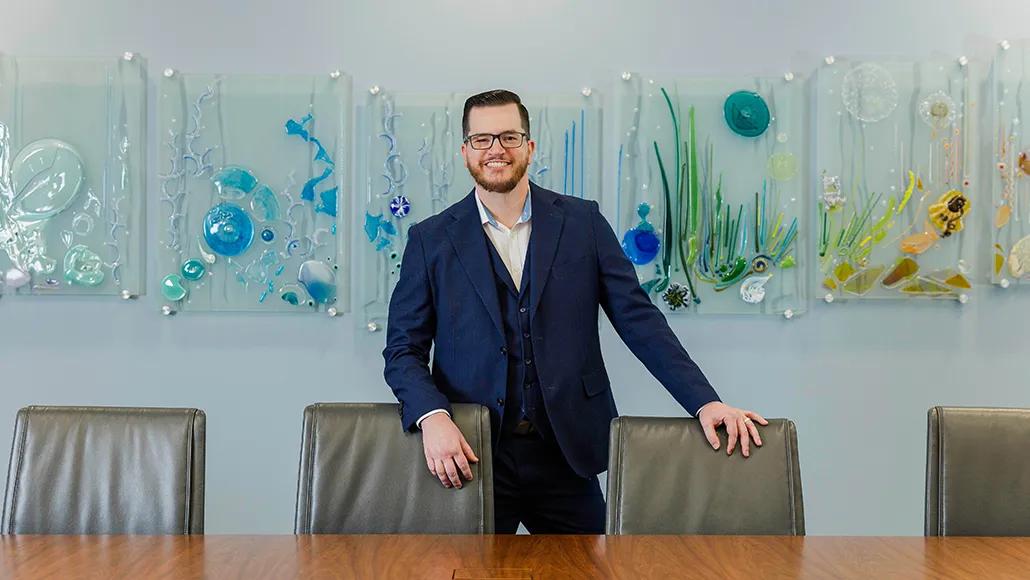
“If our learning is sound but doesn’t create the results we need, how useful is it? People need to see why learning is important to them. Usefulness is queen … or king,” says Justin Fulton, chief talent and learning officer for Sentara Health.
“If our learning is sound but doesn’t create the results we need, how useful is it? People need to see why learning is important to them. Usefulness is queen … or king,” says Justin Fulton, chief talent and learning officer for Sentara Health.
Content
He asserts that delivering solutions that are practical and immediately solve business problems is the mandate of talent development.
He asserts that delivering solutions that are practical and immediately solve business problems is the mandate of talent development.
Content
Sentara Health is an integrated, not-for-profit healthcare delivery system, with 34,000 employees; 12 hospitals across Virginia and Northeastern North Carolina, including 10 hospitals with the prestigious Magnet recognition; and the Sentara Health Plans division, which serves more than 1 million members in Virginia and Florida.
Sentara Health is an integrated, not-for-profit healthcare delivery system, with 34,000 employees; 12 hospitals across Virginia and Northeastern North Carolina, including 10 hospitals with the prestigious Magnet recognition; and the Sentara Health Plans division, which serves more than 1 million members in Virginia and Florida.
Content
Fulton explains that the organization’s broad talent challenges revolve around retention, succession, and clinical staffing shortages. Based on statistics from the Health Resources and Services Administration , the US Department of Health and Human Services projects that the country will experience an overall nursing shortage rate of 8 percent in 2026.
Fulton explains that the organization’s broad talent challenges revolve around retention, succession, and clinical staffing shortages. Based on statistics from the Health Resources and Services Administration, the US Department of Health and Human Services projects that the country will experience an overall nursing shortage rate of 8 percent in 2026.
Content
Other pressing skills needs include building business acumen, such as business and financial stewardship, and data fluency. Fulton adds that “healthcare is rich with data. Understanding which datasets are important for us to lean into is critical to serve our healthcare consumers.”
Other pressing skills needs include building business acumen, such as business and financial stewardship, and data fluency. Fulton adds that “healthcare is rich with data. Understanding which datasets are important for us to lean into is critical to serve our healthcare consumers.”
Content
Similarly, he describes the growing omnipresence of assistive artificial intelligence throughout healthcare but warns that some of the current outputs are questionable. “It takes the right level of experience to be able to distinguish quality AI outputs to determine what will be useful. We are building the foundation of how to empower our folks to use AI as a thought partner in all sorts of settings, to deliver results that impact their consumers, colleagues, and communities,” says Fulton.
Similarly, he describes the growing omnipresence of assistive artificial intelligence throughout healthcare but warns that some of the current outputs are questionable. “It takes the right level of experience to be able to distinguish quality AI outputs to determine what will be useful. We are building the foundation of how to empower our folks to use AI as a thought partner in all sorts of settings, to deliver results that impact their consumers, colleagues, and communities,” says Fulton.
Content
In addition, maintaining compliance and boosting clinical expertise and other role-based competencies, such as care coordination and patient safety, are in high demand among Sentara colleagues. “A lot of our people just want to deepen their expertise within their current role,” he states.
In addition, maintaining compliance and boosting clinical expertise and other role-based competencies, such as care coordination and patient safety, are in high demand among Sentara colleagues. “A lot of our people just want to deepen their expertise within their current role,” he states.
Content
“We have clear and present needs that drive us,” Fulton adds. “The question we wrestle with is: 'How can learning and talent reduce the noise and friction within the organization to create enabling opportunities for those working closest to our consumers, those patients at the bedside, and our members that we provide coverage for within our health plan?'”
“We have clear and present needs that drive us,” Fulton adds. “The question we wrestle with is: 'How can learning and talent reduce the noise and friction within the organization to create enabling opportunities for those working closest to our consumers, those patients at the bedside, and our members that we provide coverage for within our health plan?'”
Listen to the organization
Content
Sentara’s talent and learning function comprises three core areas: learning, talent management, and talent acquisition. Each area works with HR business partners and business leaders across various profit and loss (P&L) centers to pinpoint workforce development and future talent needs.
Sentara’s talent and learning function comprises three core areas: learning, talent management, and talent acquisition. Each area works with HR business partners and business leaders across various profit and loss (P&L) centers to pinpoint workforce development and future talent needs.
Content
“We regularly talk with P&Ls about their business,” says Fulton. “We have conversations with senior leaders to understand what, in talent, is getting in the way of them being able to achieve their priorities. We ask how we can help accelerate their agenda through integrated talent strategies.”
“We regularly talk with P&Ls about their business,” says Fulton. “We have conversations with senior leaders to understand what, in talent, is getting in the way of them being able to achieve their priorities. We ask how we can help accelerate their agenda through integrated talent strategies.”
Content
The learning team focuses on developing solutions for everything from onboarding and business-application training to call-center enablement, digital clinical learning, and competency validation. But before diving into developing a training solution, Fulton explains, the team connects with HR business partners and business and clinical leaders to discuss all elements of performance needs and conducts a thorough analysis that evaluates factors such as skill requirements, environmental conditions, mindsets, team composition and collaboration, and job structure.
The learning team focuses on developing solutions for everything from onboarding and business-application training to call-center enablement, digital clinical learning, and competency validation. But before diving into developing a training solution, Fulton explains, the team connects with HR business partners and business and clinical leaders to discuss all elements of performance needs and conducts a thorough analysis that evaluates factors such as skill requirements, environmental conditions, mindsets, team composition and collaboration, and job structure.
Content
“When someone says they need training, we don’t just say OK. We have a consultation process and multiple iterative conversations. We need to listen carefully to figure out what it is they’re really trying to achieve,” he says. “Then we can challenge each other to make sure that we can deliver something that creates a better outcome for them, whether that is learning or some other talent solution.”
“When someone says they need training, we don’t just say OK. We have a consultation process and multiple iterative conversations. We need to listen carefully to figure out what it is they’re really trying to achieve,” he says. “Then we can challenge each other to make sure that we can deliver something that creates a better outcome for them, whether that is learning or some other talent solution.”
Content
Meanwhile, the talent management team focuses on organization development, workforce planning, and change management efforts, as well as cyclical talent activities such as performance reviews, engagement surveys, and succession management. Essentially, the group taps into “all of the ways in which we listen to and assess the workforce to scale,” Fulton notes.
Meanwhile, the talent management team focuses on organization development, workforce planning, and change management efforts, as well as cyclical talent activities such as performance reviews, engagement surveys, and succession management. Essentially, the group taps into “all of the ways in which we listen to and assess the workforce to scale,” Fulton notes.
Content
The talent management team accesses the organization’s various performance management tools to glean workforce development needs. For example, Sentara embeds job-based competency evaluation into annual appraisals to help uncover skills gaps and determine proficiency levels. Specifically, 70 percent of the appraisals’ rated section evaluates employees’ hard skills, and 30 percent focuses on the soft skills and cultural attributes workers must demonstrate in their day-to-day activities and interactions with colleagues, patients, and consumers.
The talent management team accesses the organization’s various performance management tools to glean workforce development needs. For example, Sentara embeds job-based competency evaluation into annual appraisals to help uncover skills gaps and determine proficiency levels. Specifically, 70 percent of the appraisals’ rated section evaluates employees’ hard skills, and 30 percent focuses on the soft skills and cultural attributes workers must demonstrate in their day-to-day activities and interactions with colleagues, patients, and consumers.
Content
According to Fulton, his team also uses AI tools to mine comments in the annual employee engagement survey as well as the development section of the appraisals to discover trends in employees’ development goals and career ambitions. He explains that this section gives people an opportunity to voice what they like about their work, what they aspire for next in terms of their careers, and what support they need from the organization or their managers to pursue their professional goals.
According to Fulton, his team also uses AI tools to mine comments in the annual employee engagement survey as well as the development section of the appraisals to discover trends in employees’ development goals and career ambitions. He explains that this section gives people an opportunity to voice what they like about their work, what they aspire for next in terms of their careers, and what support they need from the organization or their managers to pursue their professional goals.
Pull people up
Content
Fulton imparts that a significant portion of Sentara’s workers are eligible for retirement, and burnout and stress make retention a perennial issue for many members of its workforce.
Fulton imparts that a significant portion of Sentara’s workers are eligible for retirement, and burnout and stress make retention a perennial issue for many members of its workforce.
Content
“We need to ensure that we’re preparing the next generation of leaders to run the business,” he states. “And we want programs that pull people up into leadership, not just those that are most visible. We want to champion visibility at all levels for our talent.”
“We need to ensure that we’re preparing the next generation of leaders to run the business,” he states. “And we want programs that pull people up into leadership, not just those that are most visible. We want to champion visibility at all levels for our talent.”
Content
Enter ASPIRE, Sentara’s nomination-driven set of leadership development programs centered around advancing high-potential employees. The tiered programs support individual contributors, whether clinical, physician, or nonclinical, preparing for frontline leadership functions; managers and supervisors preparing for director positions; and directors aspiring to senior-level roles.
Enter ASPIRE, Sentara’s nomination-driven set of leadership development programs centered around advancing high-potential employees. The tiered programs support individual contributors, whether clinical, physician, or nonclinical, preparing for frontline leadership functions; managers and supervisors preparing for director positions; and directors aspiring to senior-level roles.
Content
Each program has about 25 to 35 seats, and Fulton notes that the cohorts ensure “participants are exposed to different business lines, geographies, backgrounds, and roles to drive diversity of experiences and thought throughout our programming.”
Each program has about 25 to 35 seats, and Fulton notes that the cohorts ensure “participants are exposed to different business lines, geographies, backgrounds, and roles to drive diversity of experiences and thought throughout our programming.”
Content
Every experience lasts about four months, and learners participate in an average of six sessions, each of which occurs every few weeks. After every session, participants must return to their jobs and apply what they learned on the job and then return to the next session ready to discuss how their performance changed.
Every experience lasts about four months, and learners participate in an average of six sessions, each of which occurs every few weeks. After every session, participants must return to their jobs and apply what they learned on the job and then return to the next session ready to discuss how their performance changed.
Content
“If one of the session topics was on communication, we start the next session asking them to share what their experiences looked like. Did they have to give feedback to a team member? What did that look like? We want them to be honest about what worked for them and what didn’t. We want them to learn socially from one another,” explains Fulton.
“If one of the session topics was on communication, we start the next session asking them to share what their experiences looked like. Did they have to give feedback to a team member? What did that look like? We want them to be honest about what worked for them and what didn’t. We want them to learn socially from one another,” explains Fulton.
Content
Each cohort has a slightly different learning experience. For instance, participants interacting directly with patients and clients typically attend full-day sessions, while those more senior in the organization access more modular sessions that run about two hours. Participants also receive coaching and mentoring during and after the learning engagement.
Each cohort has a slightly different learning experience. For instance, participants interacting directly with patients and clients typically attend full-day sessions, while those more senior in the organization access more modular sessions that run about two hours. Participants also receive coaching and mentoring during and after the learning engagement.
Content
In addition, Sentara’s CEO and chief people officer are deeply invested in the success of the program. Both leaders not only participate in kick‑off sessions and graduation celebrations, but also actively sponsor and champion the program across the organization.
In addition, Sentara’s CEO and chief people officer are deeply invested in the success of the program. Both leaders not only participate in kick‑off sessions and graduation celebrations, but also actively sponsor and champion the program across the organization.
Content
Their visible commitment—internally and externally—reinforces that leadership development is a strategic priority for Sentara, ensuring the program remains aligned with enterprise priorities and grounded in the expectations of the most senior executives through direct conversations with participants. Their partnership ensures that the program design and directional decisions strengthen Sentara's current and future leadership pipeline.
Their visible commitment—internally and externally—reinforces that leadership development is a strategic priority for Sentara, ensuring the program remains aligned with enterprise priorities and grounded in the expectations of the most senior executives through direct conversations with participants. Their partnership ensures that the program design and directional decisions strengthen Sentara's current and future leadership pipeline.
Content
Since the program’s inception in 2023, nearly 500 leaders or soon-to-be leaders have participated in ASPIRE programs. Among the graduates, 30 percent received promotions into frontline leadership, with 32 percent of those individuals advancing into director-level positions and 22 percent taking on vice president-level roles.
Since the program’s inception in 2023, nearly 500 leaders or soon-to-be leaders have participated in ASPIRE programs. Among the graduates, 30 percent received promotions into frontline leadership, with 32 percent of those individuals advancing into director-level positions and 22 percent taking on vice president-level roles.
Content
What’s more, graduates become part of an ASPIRE alumni network that the talent and learning team uses to participate in focus groups on various talent and engagement issues and to pilot new training programs.
What’s more, graduates become part of an ASPIRE alumni network that the talent and learning team uses to participate in focus groups on various talent and engagement issues and to pilot new training programs.
Define and assess culture
Content
Like most organizations, Sentara has developed cultural attributes that shape the behavior and actions of its colleagues and leaders:
Like most organizations, Sentara has developed cultural attributes that shape the behavior and actions of its colleagues and leaders:
Content
We exist for our customers
We exist for our customers
Content
We collaborate
We collaborate
Content
We empower
We empower
Content
We continuously learn
We continuously learn
Content
We deliver
We deliver
Content
To use the attributes as the backbone of a core competency model, the talent and learning team outlined multiple behaviors for each. Fulton explains that the breakdown starts with a foundational definition that helps underpin the performance expectations. The team stratified actionable behaviors to colleague, leader, and senior leader levels, and then anchored each behavior to a five-point rating scale, with 3 as the midpoint to signify successful achievement, 4 equates to highly successful, and 5 marks exceptional.
To use the attributes as the backbone of a core competency model, the talent and learning team outlined multiple behaviors for each. Fulton explains that the breakdown starts with a foundational definition that helps underpin the performance expectations. The team stratified actionable behaviors to colleague, leader, and senior leader levels, and then anchored each behavior to a five-point rating scale, with 3 as the midpoint to signify successful achievement, 4 equates to highly successful, and 5 marks exceptional.
Content
For instance, Sentara defines the attribute “We exist for our customers” as “we build strong relationships and solutions with honesty, integrity, and authenticity.” A measurable behavior for a colleague is “to follow through with consumers to ensure concerns are addressed appropriately and timely.” Meanwhile, for a leader, a behavior is to “hold self and others accountable for meeting consumer needs,” and the organization expects senior leaders to “champion a consumer-focused environment to foster trust and provide exceptional service.”
For instance, Sentara defines the attribute “We exist for our customers” as “we build strong relationships and solutions with honesty, integrity, and authenticity.” A measurable behavior for a colleague is “to follow through with consumers to ensure concerns are addressed appropriately and timely.” Meanwhile, for a leader, a behavior is to “hold self and others accountable for meeting consumer needs,” and the organization expects senior leaders to “champion a consumer-focused environment to foster trust and provide exceptional service.”
Content
According to Fulton, “The individual behaviors and rating scale give us the ability to assess how our culture shows up in day-to-day performance, that’s measured at least annually. We’re able to codify culture into concrete behavior-based expectations.”
According to Fulton, “The individual behaviors and rating scale give us the ability to assess how our culture shows up in day-to-day performance, that’s measured at least annually. We’re able to codify culture into concrete behavior-based expectations.”
Content
He adds that the talent and learning team has “baked the attributes and behaviors into interviewing, onboarding, leadership development, and training programs so that our cultural expectations permeate throughout the employee life cycle.”
He adds that the talent and learning team has “baked the attributes and behaviors into interviewing, onboarding, leadership development, and training programs so that our cultural expectations permeate throughout the employee life cycle.”
Content
Further, he notes that the talent acquisition team integrates this work into its processes and provides interview guides to leaders so they can use the cultural attributes to screen behavioral expectations when interviewing new hires. For example, for the attribute “We collaborate,” the hiring manager may ask employees or candidates to describe a time when they collaborated with an interdisciplinary stakeholder group and provide details about what they did and the ultimate outcome of the interaction.
Further, he notes that the talent acquisition team integrates this work into its processes and provides interview guides to leaders so they can use the cultural attributes to screen behavioral expectations when interviewing new hires. For example, for the attribute “We collaborate,” the hiring manager may ask employees or candidates to describe a time when they collaborated with an interdisciplinary stakeholder group and provide details about what they did and the ultimate outcome of the interaction.
Become a credible partner
Content
Fulton believes that his team’s curiosity, co-creation, and stakeholder management has built credibility within the organization. “We’re actually solving business problems for the organization, which is why we have a seat at the table to solve real talent challenges,” he says.
Fulton believes that his team’s curiosity, co-creation, and stakeholder management has built credibility within the organization. “We’re actually solving business problems for the organization, which is why we have a seat at the table to solve real talent challenges,” he says.
Content
To illustrate his point, Fulton details a recent collaboration between the talent management team, HR business partners, and P&L leaders to co-create a talent strategy. Over six months in 2025, representatives from each group convened to review workforce demographics, industry trends and headwinds, business goals, and other talent-related issues such as employee engagement, clinical workforce fatigue, and staff shortage projections.
To illustrate his point, Fulton details a recent collaboration between the talent management team, HR business partners, and P&L leaders to co-create a talent strategy. Over six months in 2025, representatives from each group convened to review workforce demographics, industry trends and headwinds, business goals, and other talent-related issues such as employee engagement, clinical workforce fatigue, and staff shortage projections.
Content
“We asked them to share their business strategies, both near term and looking out over the next five years. Then we started identifying critical roles required for success in those businesses and what capabilities we’ll need to align on for our future,” says Fulton.
“We asked them to share their business strategies, both near term and looking out over the next five years. Then we started identifying critical roles required for success in those businesses and what capabilities we’ll need to align on for our future,” says Fulton.
Content
“We explored what could theoretically cripple the organization if that talent disappeared tomorrow. But we're also thinking about three to five years from now because we need to understand today how the critical capabilities we’ve started to identify may start to shift and change over time.”
“We explored what could theoretically cripple the organization if that talent disappeared tomorrow. But we're also thinking about three to five years from now because we need to understand today how the critical capabilities we’ve started to identify may start to shift and change over time.”
Content
The results of those meetings outlined pain points, from the meta level to singular roles in essential areas of the organization. Common themes emerged such as retention risk, shifting workforce demographics, knowledge transfer, and technology adoption gaps.
The results of those meetings outlined pain points, from the meta level to singular roles in essential areas of the organization. Common themes emerged such as retention risk, shifting workforce demographics, knowledge transfer, and technology adoption gaps.
Content
Those business inputs aligned the efforts of the HR teams, including talent management, talent acquisition, compensation and benefits, employee relations, health engagement and impact, and the HR business partner teams, to create strategies that will enable Sentara to “build, buy, or borrow the talent we need today and in our future,” Fulton says. “We’ve got a solid list of initiatives and requirements moving forward and are prioritizing our talent needs into now-next-later initiatives over the next 12, 24, and 36 months.”
Those business inputs aligned the efforts of the HR teams, including talent management, talent acquisition, compensation and benefits, employee relations, health engagement and impact, and the HR business partner teams, to create strategies that will enable Sentara to “build, buy, or borrow the talent we need today and in our future,” Fulton says. “We’ve got a solid list of initiatives and requirements moving forward and are prioritizing our talent needs into now-next-later initiatives over the next 12, 24, and 36 months.”
Content
For instance, it became clear that one strategic focus for the organization is to stabilize frontline pipelines and leadership capacity while integrating human and digital care models. Therefore, the directive for the talent and learning team is to strengthen early-career pipelines, improve onboarding, and boost leadership readiness.
For instance, it became clear that one strategic focus for the organization is to stabilize frontline pipelines and leadership capacity while integrating human and digital care models. Therefore, the directive for the talent and learning team is to strengthen early-career pipelines, improve onboarding, and boost leadership readiness.
Content
Fulton describes how the team is “developing a road map of solutions to address the workforce issues that stakeholders say they need us to address. We’re going to prioritize that list, and we’re going to come back to them with a plan to start chipping away at their now-next-later needs.”
Fulton describes how the team is “developing a road map of solutions to address the workforce issues that stakeholders say they need us to address. We’re going to prioritize that list, and we’re going to come back to them with a plan to start chipping away at their now-next-later needs.”
Content
The plan will present options and share time requirements and financial investments. “We are making intentional choices to stop doing work that is not aligned with this road map. We negotiate and help stakeholders recognize what trade-offs we’re making together,” he adds.
The plan will present options and share time requirements and financial investments. “We are making intentional choices to stop doing work that is not aligned with this road map. We negotiate and help stakeholders recognize what trade-offs we’re making together,” he adds.
Content
Fulton declares that they now have a “repeatable, scalable program to partner with P&Ls on talent strategy.” Moving forward, the talent and learning team will work with HR business partners to meet quarterly with business stakeholders to assess initiatives it has rolled out that align with the talent road map and review what’s coming next to confirm that those solutions are still viable and necessary.
Fulton declares that they now have a “repeatable, scalable program to partner with P&Ls on talent strategy.” Moving forward, the talent and learning team will work with HR business partners to meet quarterly with business stakeholders to assess initiatives it has rolled out that align with the talent road map and review what’s coming next to confirm that those solutions are still viable and necessary.
Content
“Talent and learning need to be integrated into the business ecosystem. As we work with the people that we serve, we must co-create outcomes in a way that is sustainable for years to come,” he says. “And as we get better at partnering and building solutions that have immediate results, we can accomplish more over time and have a bigger impact on the organization.”
“Talent and learning need to be integrated into the business ecosystem. As we work with the people that we serve, we must co-create outcomes in a way that is sustainable for years to come,” he says. “And as we get better at partnering and building solutions that have immediate results, we can accomplish more over time and have a bigger impact on the organization.”
Content
Read more from Talent Development Leader .