
Talent Development Leader
Transferable Skills, Versatile Careers
Train staff not only for the roles they have or the ones they want but for the company’s future needs.
Tue Apr 29 2025
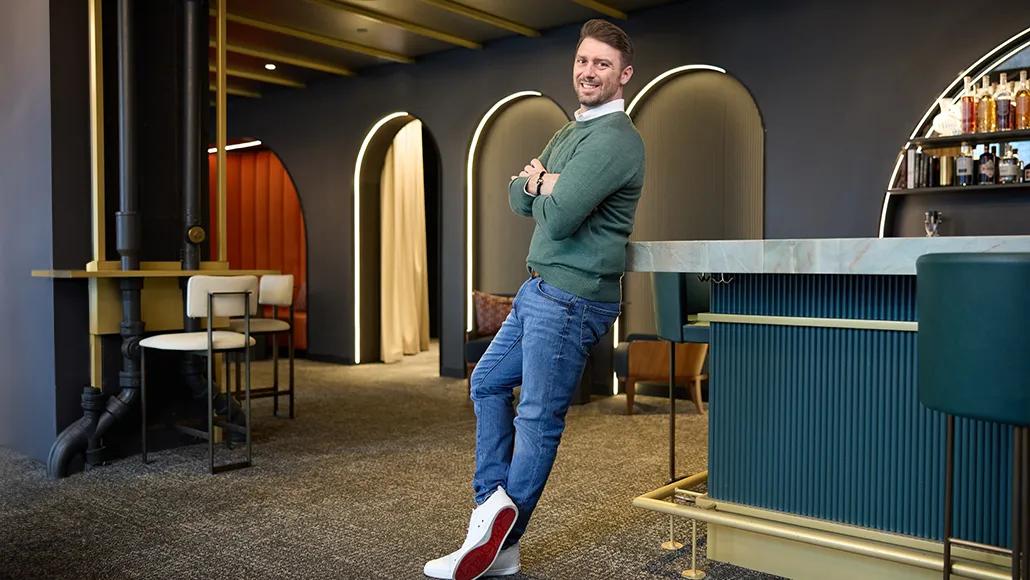
Jay Fortuna, vice president of learning and organizational development for GoHealth, started his career in sales. After proving his worth as a national achiever with a Fortune 500 financial institution, a manager asked him what he wanted to do next in his career. When Fortuna replied that he wanted to move into training, the manager scoffed.
He left that employer the same day. “I knew then that was not a company I wanted to stay with,” says Fortuna. “It was not a place that could support my career.”
After a few months working at a new bank, the leadership noticed that Fortuna had assisted with several training sessions and asked him whether he was interested in moving to an L&D role. “I felt like the stars aligned, and I never looked back,” he states.
That trajectory has framed Fortuna’s attitude about career potential and mobility.
Enter impact plans
Fortuna’s current company, GoHealth, serves millions of Medicare Advantage consumers. The organization’s 2,500 employees work in areas such as sales and benefits consulting, engineering, analytics, customer engagement, quality assurance, and operations. With such a broad array of roles, Fortuna asserts that GoHealth “needs to be a skills-based organization. We’re focused on developing transferable skills and taking a lattice approach to careers.”
He explains that if a sales agent wants to grow into an operations position or a recruiter wants to shift to a data scientist role, there should be a path for them to get there. “People want options so they can find fulfillment in their careers,” he states. “Fulfillment means different things. Is the work challenging? Is the job personally and financially rewarding? Is there potential to grow?”
Fortuna and his team have developed impact plans that detail the skills, knowledge, and learning requirements for approximately 260 roles within GoHealth. Each plan outlines the pathway an employee can follow if they want to venture into a different role.
The L&D team started by developing the impact plan framework and then worked with HR and leaders within each department to compile data on behavioral-based and technical competencies for each position, noting any information that cut across multiple job titles.
For instance, 70 percent of customer support positions need proficiency in components such as communication, negotiations, and specific systems or software knowledge. Or, as another example, 90 percent of director roles require expertise in budgeting, data analysis, and conflict resolution.
When gaps cropped up, the L&D team consulted with subject matter experts regarding whether any skills on other impact plans also applied to positions on their teams.
“Eventually, we landed on a spot where we were able to splice out skills and requirements for every role and at every leadership level,” Fortuna states. Rather than look at proficiency level for each skill, impact plans “take a building-block approach to competencies.”
For example, while communication is a baseline skill for every role, a high-level competency such as strategic thinking typically only applies to senior leaders. A department manager must be proficient in core leadership skills as well as any skill their team members must possess.
The L&D team maps learning opportunities to each skill in every impact plan. That includes opportunities such as coursework available via the LinkedIn Learning catalog, internal training programs, microlearning assets, coaching, and stretch assignments.
Tapping potential
Impact plans enable all staff to see the capabilities, coursework, and personal development they need for any role. When an employee leaves a position, Fortuna explains, “other employees can think, ‘Hey, I’m doing this in my role now and it can transfer over there.’”
Staff don’t have to wait for a position to open, though. At any time during their tenure, workers can access impact plans to explore other roles and discuss interests and opportunities with their managers.
“As a learning professional, I live by the core value that everyone has potential. I just have to help them unlock it,” Fortuna says.
When a position does open up, interested individuals have already completed stretch assignments and spent “time working on a project in a different department, in a new capacity to see if it really fits,” Fortuna says. That extra experience is not for a specific role, however, and doesn’t necessarily mean any worker is certain to get the job.
“Employees still have to perform in their current role, and they still have to interview. But they’re the first person we will talk to internally. This gives them the best opportunity,” Fortuna states. “They’re feeling rewarded, and they see what it takes to have the mobility to get to where they want to go. It’s just on them to do it.”
Managers can also review impact plans to see what capabilities and knowledge align with their needs, and they can pull candidates based on that data.
Lateral moves
Throughout his career, Fortuna has observed that when most organizations consider internal mobility and succession planning, they only look at who is performing well at the jobs directly below any given role. For example, individual performers who excel at their current job become managers in the same department.
“But they epically fail because they’re landing these jobs without prior development,” says Fortuna. “We base mobility on people who can demonstrate the competencies that they have, not the competencies that they will need.”
He likens GoHealth’s approach and impact plans to winning athletic pursuits. “Are there athletes that are born with natural gifts of height and the ability to run faster and jump? Sure, but they also train. I think about our employees the same way. They all have unlimited potential. As long as someone wants to advance and grow, we can build their potential and help them level up their career.”
View Courses Recommended for You