
Talent Development Leader
If AI Reads the Room
Technology can give facilitators real-time feedback, but should TD functions be quick to adopt it?
Mon Aug 03 2026
The first time I became a trainer, my master trainer filmed me—not on a sleek platform, not online, and definitely not with instant playback. It was on a VHS tape.
They handed it to me at the end of the day and said, “Watch this. Come back tomorrow ready to do it again.”
I remember pressing play and immediately wanting to turn it off. Every habit, movement, and little thing I didn’t realize I did was suddenly in full view. For example, although I thought I was simply holding a pen in my hand, it turns out that I was unknowingly conducting an entire symphony with it, annotating every point, pause, and sentence.
It was mortifying but also incredibly helpful. Feedback has always lived in that tension for me, both as a gift and a burden, something I’ve written about before. I watched, I adjusted, and the next day, I showed up and tried again.
That kind of feedback came after the fact. I had space to reflect, make sense of it, and decide what to do differently.
Things have changed
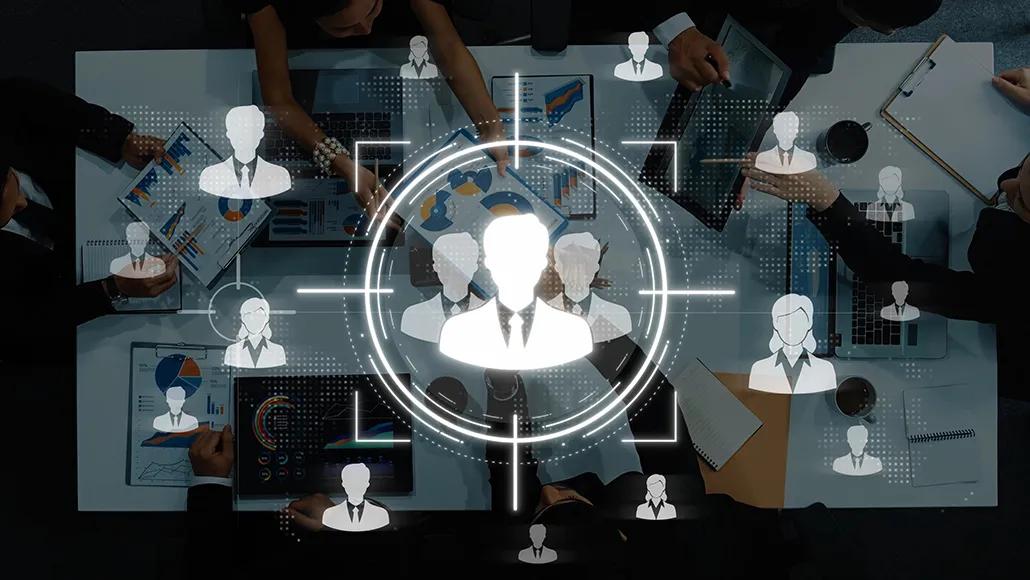
Imagine receiving that same level of feedback while you’re in the moment, as you’re speaking, facilitating, or leading, not from a person but a live stream of data indicating in real time who’s engaged, who’s confused, and what’s landing.
AI is already changing how we measure learner engagement. But what could happen if AI starts interpreting those signals and providing feedback to facilitators in real time?
As tools become more sophisticated, I’ve been paying close attention to engagement measurement in learning environments. For example, platforms such as Class for Microsoft Teams can capture how often and when specific participants are chatting, raising their hands, coming off mute, and have their cameras turned on. Those details create a level of visibility into participant activity that most facilitators would struggle to track on their own in the moment.
Note that this isn’t feedback on the facilitator. The tool is not indicating how you’re doing. Rather, it’s tallying what participants are doing and providing data you can interpret and respond to. In other words, it’s informing your decisions, not making them for you.
What happens when that same level of visibility extends further? For instance, beyond tracking what participants are doing, what if the tool is interpreting the data and feeding that information back to you in real time?
Reviewing data after the fact is one thing, but responding to it in the moment is something else entirely. As learning strategist Josh Cavalier, author of Applying AI in Learning and Development, noted when I asked about that shift, we’re already seeing the early stages of real-time feedback in learning environments, and the pace of development is only accelerating.
Why it’s so tempting
For many facilitators, the first instinct when hearing about real-time feedback isn’t excitement. It’s resistance.
When you’re leading a session, your attention is already stretched. You’re managing content, time, energy, and people all at once. Adding another layer to monitor the AI output can feel like too much. However, the appeal is still there.
It often starts with talent development leaders who want more visibility into what’s happening during a session. Are people engaged? Are they participating? Is this working?
For facilitators, that appeal tends to come a moment later as they consider whether the functionality could help them make better decisions in the moment. During training events, facilitators are making decisions constantly. Most of the time, they’re relying on instinct, experience, and whatever signals they can pick up from the room.
Real-time feedback promises more clarity in those moments. And in that context, it starts to feel less like interference and more like support.
The trade-off: Attention and presence
The challenge is both the technology and what it asks of the person leading the experience. We cannot fully be with our audience and monitor a live stream of data at the same time.
The limitation isn’t whether AI tools can generate real-time insights, points out AI thought leader Markus Bernhardt. It’s whether a human can meaningfully process those insights while also delivering training.
That’s not a technology problem. It’s a human one.
When our attention splits, presence suffers. Instead of being fully tuned in to the people in front of us, we risk shifting our focus to the data about them. And the moment we start watching the data more than the people, we move from creating connection to managing performance.
The risk: When data feels like truth
There’s another layer that’s easy to miss. Data feels objective.
When we see numbers, patterns, or indicators, it’s natural to assume they’re telling us the truth about what’s happening. But in this case, much of that data is still interpretation.
Engagement, confusion, and sentiment aren’t fixed states. They’re human experiences, shaped by context, personality, and even the moment someone is having outside of a session.
AI workflow strategist Michelle Lentz says AI tools can get it wrong. She explained to me that they can flag confusion where there isn’t any or miss it entirely. Sometimes silence doesn’t mean disengagement. It could mean people are thinking. That’s where the risk comes in. AI tools can’t always account for what humans pick up instinctively.
Real-time feedback doesn’t just inform decisions. It influences them. If a facilitator sees a signal that says “confusion,” they may slow down, over-explain, or change direction, even if that signal isn’t accurate.
Over time, that kind of feedback can start to shape behavior in ways we don’t fully realize. Not because the data is bad, but because it’s convincing.
The skill we may lose
There’s a longer-term question underneath all of this: If AI starts reading the room for us, what happens to our ability to read it ourselves?
Facilitation is a skill we build over time. We learn to notice shifts in energy; recognize when something isn’t landing; and sense when to pause, push, or pivot. If we begin to rely on real-time feedback to tell us what’s happening, we risk losing the practice of noticing it on our own. Not all at once, but gradually.
That means we must pair any move toward real-time feedback with a deliberate effort to keep building that human skill.
Designed to perform in real time
My first instinct regarding real-time feedback? It’s too much; don’t distract me.
However, between conversations with artists and athletes, and living with someone who analyzes sports daily, I’ve been surrounded by examples of what real-time performance looks like. It’s made me rethink my initial reaction.
When I started looking at real-time feedback through a different lens, I became less resistant to the idea. Professional athletes receive coaching in real time. They adjust constantly based on signals, feedback, and cues that help them perform at a high level. That’s part of the expectation.
It’s also worth noting that such feedback is coming from other humans like coaches and teammates who understand context and nuance. That’s different from AI-generated feedback, which is interpreting behavior rather than experiencing it.
Another important difference is that athletes have built-in moments, such as timeouts, breaks, and pauses in play, to process feedback and make adjustments. In addition, athletes can respond the way they do because they train for it. They rehearse, repeat, and refine until their responses become instinctive. They’re not thinking through every adjustment in the moment. They’ve already done that work ahead of time. That’s part of what makes real-time feedback usable for them.
In training, facilitation, and speaking, we don’t always approach our work that way. Rehearsal can feel optional. But without that level of preparation, real-time input becomes difficult to process.
The session keeps moving. The moment doesn’t pause. And yet, facilitators and speakers still must be able to perform at a high level, read the room, adjust in real time, and deliver a meaningful experience.
We don’t always create the conditions that make that level of adjustment possible. That’s where this starts to feel less like a question of possibility and more like a question of design.
A more useful way to consider it
If real-time AI feedback becomes more integrated into our work, the question is how might we use that feedback effectively?
A constant stream of data, especially data that requires interpretation, can overwhelm more than it helps. But that doesn’t mean there isn’t value in real-time input. It just means we may be thinking about it the wrong way.
What if the future of real-time feedback isn’t more information, but better signals? Instead of dashboards and continuous metrics, imagine simple, actionable cues: Slow down. Move on. Stay here. Check for understanding.
In many cases, such feedback may be most effective when it shows up as signals rather than words. Some examples are simple visual icons or indicators that a facilitator can quickly understand without pulling attention away from the moment. The goal isn’t to explain what’s happening. It’s to support the facilitator in staying present while responding to it.
That idea aligns closely with how I think about facilitation as a form of performance. In my work on stagecraft for trainers, I explore how presence, awareness, and responsiveness are central to creating connection in the moment. Real-time feedback, if designed well, should support those skills, not replace them.
As such, feedback becomes a guide instead of a distraction, something that informs the moment without taking you out of it.
Preparing for What Comes Next
Feedback can accelerate growth, but it can also overwhelm, distract, or undermine confidence when the timing isn’t right or the recipient doesn’t fully understand it. Real-time AI feedback raises that tension further. Rather than rushing to adopt it, TD leaders have an opportunity to prepare their facilitators thoughtfully. TD leaders must design environments where their people can use it effectively.
For Leaders
Set clear expectations about what feedback is and isn’t. Facilitators should treat real-time signals as inputs, not judgments. The data is interpretive, not definitive.
Design for psychological safety first. Before introducing any form of real-time feedback, ensure that facilitators and presenters feel supported, not evaluated. Feedback should enable growth instead of create pressure.
Create space to practice before it matters. If you expect your people to respond to feedback in the moment, they need opportunities to rehearse doing so in low-stakes environments.
For facilitators, speakers, and trainers
Strengthen your ability to read the room without AI data. Pay attention to what you can already see and hear: Who is leaning in, who is quiet, how quickly people respond, and where energy shifts. The better you are at noticing those signals on your own, the more effectively you can use additional input without relying on it.
Rehearse with intention. Real-time performance relies on preparation. Practice your delivery, pacing, and pivots so adjustments feel natural.
Decide in advance what you will respond to. Not every signal deserves your attention. Clarify ahead of time what you will act on during a session and what can wait.
Technology isn’t everything
Facilitators have always been reading the room, through expressions, energy, silence, and subtle shifts that don’t show up in a report. Although technology may give us more ways to measure engagement, that doesn’t mean we should hand over the responsibility of understanding it.
The future of facilitation isn’t just about better data. It’s about knowing what to pay attention to and choosing to stay connected to the people right in front of us.
No VHS required.
Read more from Talent Development Leader.
View Courses Recommended for You