ATD, association for talent development

TD Magazine Article

Member Benefit

Examining Integrated Talent Management

Content

Show value by learning to align initiatives, collecting data, and demonstrating the impact on business results.

Show value by learning to align initiatives, collecting data, and demonstrating the impact on business results.

By and

Sun Sep 08 2013

Loading...
Examining Integrated Talent Management-6febfa2e507d146266adece9d0b5f5cee859b61381a5c502a33005ccaee86ac6

Content

Today, world-class organizations are expanding the role of talent management by creating integrated talent management (ITM) organizations. These organizations have professionals who are motivated to implement talent management initiatives designed to drive the achievement of business goals, and are taking bold steps to measure the impact of those initiatives.

Today, world-class organizations are expanding the role of talent management by creating integrated talent management (ITM) organizations. These organizations have professionals who are motivated to implement talent management initiatives designed to drive the achievement of business goals, and are taking bold steps to measure the impact of those initiatives.

Content

ITM is focused on building business capability by aligning the various talent management functions so that ITM can have a stronger impact on business results—the whole becomes greater than the individual parts. Alignment can lead to stronger business results, increase efficiency and effectiveness, and create higher performing individuals and organizations.

ITM is focused on building business capability by aligning the various talent management functions so that ITM can have a stronger impact on business results—the whole becomes greater than the individual parts. Alignment can lead to stronger business results, increase efficiency and effectiveness, and create higher performing individuals and organizations.

Content

But what is meant by the term "integrated talent management"? In our book, Integrated Talent Management Scorecards: Insights From World-Class Organizations on Demonstrating Value (ASTD Press), ITM is defined as "united functions with a common goal to attain employee capabilities that will increase business performance."

But what is meant by the term "integrated talent management"? In our book, Integrated Talent Management Scorecards: Insights From World-Class Organizations on Demonstrating Value (ASTD Press), ITM is defined as "united functions with a common goal to attain employee capabilities that will increase business performance."

Integrated talent management model

Content

ITM functions often are referred to using different terminology. The model illustrated below incorporates six talent management functions that are its core components.
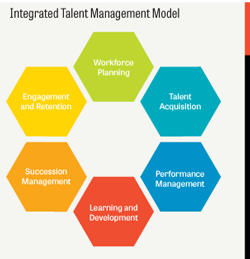
ITM functions often are referred to using different terminology. The model illustrated below incorporates six talent management functions that are its core components.

Examining Integrated Talent Management-641555ff157be28661c66efcda87c96c6b1c6c2b30b7568c3844beaadafd9a79

Content

Workforce planning refers to the strategic process of forecasting the talent needs of the business and creating plans that will ensure high performance. Strategic workforce planning includes assessing the business direction, determining talent implications, identifying segmented roles, and defining the build or buy actions to be taken. The output of strategic workforce planning assessments will influence the goals of the other talent management functions.

Workforce planning refers to the strategic process of forecasting the talent needs of the business and creating plans that will ensure high performance. Strategic workforce planning includes assessing the business direction, determining talent implications, identifying segmented roles, and defining the build or buy actions to be taken. The output of strategic workforce planning assessments will influence the goals of the other talent management functions.

Content

Talent acquisition involves attracting, selecting, and acquiring the right talent that the business needs to accomplish its strategy and goals. The talent needs to be acquired at the right time, in the right place, and for the right price.

Talent acquisition involves attracting, selecting, and acquiring the right talent that the business needs to accomplish its strategy and goals. The talent needs to be acquired at the right time, in the right place, and for the right price.

Content

Performance management includes how the business and individuals set goals, and manage and measure the performance required to achieve strong individual and business performance. The business goals cascade downward to achieve performance alignment.

Performance management includes how the business and individuals set goals, and manage and measure the performance required to achieve strong individual and business performance. The business goals cascade downward to achieve performance alignment.

Content

Learning and development places emphasis on the professional development required by individuals to successfully do their jobs such as technical or job-related skills training and related competencies. It also includes career development for individuals and leadership development for all levels of managers, as well as onboarding and mentoring.

Learning and development places emphasis on the professional development required by individuals to successfully do their jobs such as technical or job-related skills training and related competencies. It also includes career development for individuals and leadership development for all levels of managers, as well as onboarding and mentoring.

Content

Succession management is focused on how businesses effectively identify, develop, and transition individuals into key roles to ensure continued business success. It includes not only replacement planning, but also the identification and development of high-potential individuals and the management of talent pools. Leadership competencies, executive development, 360-degree feedback, executive coaching, and job rotations also are within this talent management function.

Succession management is focused on how businesses effectively identify, develop, and transition individuals into key roles to ensure continued business success. It includes not only replacement planning, but also the identification and development of high-potential individuals and the management of talent pools. Leadership competencies, executive development, 360-degree feedback, executive coaching, and job rotations also are within this talent management function.

Content

Engagement and retention is focused on such talent management efforts as employee engagement or satisfaction surveys and related action planning. It also includes a focus on the tools and programs that can be implemented to reward and motivate individuals such as incentive programs, diversity initiatives, employee resource groups, and recognition programs.

Engagement and retention is focused on such talent management efforts as employee engagement or satisfaction surveys and related action planning. It also includes a focus on the tools and programs that can be implemented to reward and motivate individuals such as incentive programs, diversity initiatives, employee resource groups, and recognition programs.

Scorecards

Content

Even when talent management functions are integrated and aligned with strategic priorities, they often aren't able to easily demonstrate their contributions to business results. And yet, the purpose of integrating these functions is to have a significant impact on the business and achieve important business results.

Even when talent management functions are integrated and aligned with strategic priorities, they often aren't able to easily demonstrate their contributions to business results. And yet, the purpose of integrating these functions is to have a significant impact on the business and achieve important business results.

Content

For an ITM organization to be successful, it needs to be able to show that it has achieved results that have contributed to the success of the business. The implementation of ITM scorecards can enable such organizations to align talent management initiatives with business goals, collect and analyze data, and report the impact of these initiatives on business results. There are three levels of scorecards: TM organizational macro scorecards, TM functional macro scorecards, and TM initiative micro scorecards.

For an ITM organization to be successful, it needs to be able to show that it has achieved results that have contributed to the success of the business. The implementation of ITM scorecards can enable such organizations to align talent management initiatives with business goals, collect and analyze data, and report the impact of these initiatives on business results. There are three levels of scorecards: TM organizational macro scorecards, TM functional macro scorecards, and TM initiative micro scorecards.

Content

The TM organizational macro scorecard is created at the ITM organization level and is directly aligned with business-level goals and measures such as revenue, operational costs, customer satisfaction, product or service quality, employee engagement, and turnover. It contains a roll-up of the metrics for all talent management functions within the organization, which shows the overall ITM contribution to each business goal.

The TM organizational macro scorecard is created at the ITM organization level and is directly aligned with business-level goals and measures such as revenue, operational costs, customer satisfaction, product or service quality, employee engagement, and turnover. It contains a roll-up of the metrics for all talent management functions within the organization, which shows the overall ITM contribution to each business goal.

Content

The TM functional macro scorecard is created at the talent management functional level. The functions may include talent acquisition, learning and development, and succession management. This scorecard is aligned with the TM organizational macro scorecard, but would include additional activity, efficiency, and effectiveness measures specific to the talent management function that would roll up measures from the TM initiative micro scorecards.

The TM functional macro scorecard is created at the talent management functional level. The functions may include talent acquisition, learning and development, and succession management. This scorecard is aligned with the TM organizational macro scorecard, but would include additional activity, efficiency, and effectiveness measures specific to the talent management function that would roll up measures from the TM initiative micro scorecards.

Content

Finally, TM initiative micro scorecards are aligned with the TM functional macro scorecard measures and may include additional activity, efficiency, and effectiveness measures for the initiative. Each talent management initiative has its own micro scorecard with such metrics as reaction, learning, application, business impact, and return-on-investment data.

Finally, TM initiative micro scorecards are aligned with the TM functional macro scorecard measures and may include additional activity, efficiency, and effectiveness measures for the initiative. Each talent management initiative has its own micro scorecard with such metrics as reaction, learning, application, business impact, and return-on-investment data.

TM initiative micro scorecards

Content

The TM initiative micro scorecard provides detailed data that describe the success of each program. This scorecard can provide, in a single table, all the data resulting from an impact study of a talent management initiative. The TM macro and micro scorecards use the same evaluation framework defined by Donald Kirkpatrick and Jack Phillips.

The TM initiative micro scorecard provides detailed data that describe the success of each program. This scorecard can provide, in a single table, all the data resulting from an impact study of a talent management initiative. The TM macro and micro scorecards use the same evaluation framework defined by Donald Kirkpatrick and Jack Phillips.

Content

In the TM initiative micro scorecard, the section under the satisfaction heading would include the results of a Level 1 analysis that indicate the extent to which the participants were satisfied with the initiative. Examples of what to include in the results section would be

In the TM initiative micro scorecard, the section under the satisfaction heading would include the results of a Level 1 analysis that indicate the extent to which the participants were satisfied with the initiative. Examples of what to include in the results section would be

  • Content

    relevance of the talent management initiative to the job

    relevance of the talent management initiative to the job

  • Content

    recommendation of the initiative to others

    recommendation of the initiative to others

  • Content

    importance of the information received

    importance of the information received

  • Content

    intention to use the initiative's offerings

    intention to use the initiative's offerings

  • Content

    an overall rating from a satisfaction questionnaire or other measure.

    an overall rating from a satisfaction questionnaire or other measure.

Content

The section under the learning heading would include the extent to which the learning objectives have been met based on results of a Level 2 analysis. Examples of what to include in the results section would be

The section under the learning heading would include the extent to which the learning objectives have been met based on results of a Level 2 analysis. Examples of what to include in the results section would be

  • Content

    the participants' assessments of the initiative

    the participants' assessments of the initiative

  • Content

    scores from any learning measurement that may have been conducted such as a test or other assessment

    scores from any learning measurement that may have been conducted such as a test or other assessment

  • Content

    observations from others.

    observations from others.

Content

The application section would include the extent to which the performance objectives were met. Listed would be the results of a Level 3 analysis, including:

The application section would include the extent to which the performance objectives were met. Listed would be the results of a Level 3 analysis, including:

  • Content

    the importance of the use of the initiative in the work environment

    the importance of the use of the initiative in the work environment

  • Content

    the level of initiative adoption

    the level of initiative adoption

  • Content

    performance (actual or anticipated) change or improvements.

    performance (actual or anticipated) change or improvements.

Content

The tangible benefits section would include the extent to which the impact objectives have been met. These would be impact data (Level 4 analysis) and possibly ROI data (Level 5 analysis). Examples of what to include under the results section would include improvements in:

The tangible benefits section would include the extent to which the impact objectives have been met. These would be impact data (Level 4 analysis) and possibly ROI data (Level 5 analysis). Examples of what to include under the results section would include improvements in:

  • Content

    productivity or efficiency

    productivity or efficiency

  • Content

    quality

    quality

  • Content

    cost control

    cost control

  • Content

    customer satisfaction.

    customer satisfaction.

Content

The section under the intangible benefits heading would include those benefits discovered in the Level 4 analysis that could not be converted into a tangible monetary value, but are seen by the organization as providing value. For example:

The section under the intangible benefits heading would include those benefits discovered in the Level 4 analysis that could not be converted into a tangible monetary value, but are seen by the organization as providing value. For example:

  • Content

    improved customer satisfaction

    improved customer satisfaction

  • Content

    increased job satisfaction

    increased job satisfaction

  • Content

    reduced conflicts

    reduced conflicts

  • Content

    reduced stress

    reduced stress

  • Content

    increased teamwork.

    increased teamwork.

Content

If performance and business impact are measured, the method used to isolate the impact of the talent management initiative would be provided such as a control group arrangement or participant or executive perceptions. If an ROI or benefit-cost-ratio analysis is conducted, the technique used to convert the impact data would be listed, as would the fully loaded program costs. Also listed would be barriers that impeded the success of the initiative, and recommendations that were made as a result of evaluating the talent management initiative.

If performance and business impact are measured, the method used to isolate the impact of the talent management initiative would be provided such as a control group arrangement or participant or executive perceptions. If an ROI or benefit-cost-ratio analysis is conducted, the technique used to convert the impact data would be listed, as would the fully loaded program costs. Also listed would be barriers that impeded the success of the initiative, and recommendations that were made as a result of evaluating the talent management initiative.

Content

The TM initiative micro scorecard format may vary by program or may have some elements missing because all levels of evaluation for that initiative were not conducted. No matter the format used or the levels of evaluation conducted, there are critical success factors that should be considered when implementing both macro and micro level scorecards.

The TM initiative micro scorecard format may vary by program or may have some elements missing because all levels of evaluation for that initiative were not conducted. No matter the format used or the levels of evaluation conducted, there are critical success factors that should be considered when implementing both macro and micro level scorecards.

Content

An ITM organization has the ability to create stronger alignment with the business and demonstrate its value by creating TM macro- and micro-level scorecards. The scorecards show that the talent management team is aligned with the goals of the business and is helping to achieve those goals.

An ITM organization has the ability to create stronger alignment with the business and demonstrate its value by creating TM macro- and micro-level scorecards. The scorecards show that the talent management team is aligned with the goals of the business and is helping to achieve those goals.

Examples of Talent Management Initiatives

Content

Each talent management initiative has its own micro scorecard with metrics, including reaction, learning, application, business impact, and return-on-investment data. Here are sample initiatives aligned to the six functions of the talent management model.

Each talent management initiative has its own micro scorecard with metrics, including reaction, learning, application, business impact, and return-on-investment data. Here are sample initiatives aligned to the six functions of the talent management model.

  • Content

    Workforce planning: identification of strategic, key, core, and transitional roles and implementation of the action plans associated with each role.

    Workforce planning: identification of strategic, key, core, and transitional roles and implementation of the action plans associated with each role.

  • Content

    Talent acquisition: executive recruiting, recruiting for specific strategic or key roles, internships, and college recruiting.

    Talent acquisition: executive recruiting, recruiting for specific strategic or key roles, internships, and college recruiting.

  • Content

    Performance management: annual performance review process, quarterly performance review process, individual development plans, and performance improvement plans.

    Performance management: annual performance review process, quarterly performance review process, individual development plans, and performance improvement plans.

  • Content

    Learning and development: onboarding program, sales training, mentoring programs, career development initiatives, and management development.

    Learning and development: onboarding program, sales training, mentoring programs, career development initiatives, and management development.

  • Content

    Succession management: succession plans, 360-degree feedback, executive coaching, high-potential development program, and job rotations.

    Succession management: succession plans, 360-degree feedback, executive coaching, high-potential development program, and job rotations.

  • Content

    Engagement and retention: employee engagement survey, employee resource groups, recognition program, and a diversity initiative.

    Engagement and retention: employee engagement survey, employee resource groups, recognition program, and a diversity initiative.

Critical Success Factors to Consider

Content

When implementing talent management scorecards, it’s important to take the following steps.

When implementing talent management scorecards, it’s important to take the following steps.

  • Content

    Start building your scorecards today. Don’t wait for someone to request it because she might request the data in a different format that would not be nearly as meaningful or concise.

    Start building your scorecards today. Don’t wait for someone to request it because she might request the data in a different format that would not be nearly as meaningful or concise.

  • Content

    Begin with the end in mind. Plan in advance so your evaluation can aim at completing the scorecards successfully and comprehensively.

    Begin with the end in mind. Plan in advance so your evaluation can aim at completing the scorecards successfully and comprehensively.

  • Content

    Always account for the influence of other factors.

    Always account for the influence of other factors.

  • Content

    Be conservative when converting and isolating. Consult additional resources as needed to do this credibly.

    Be conservative when converting and isolating. Consult additional resources as needed to do this credibly.

  • Content

    Involve management in the process.

    Involve management in the process.

  • Content

    Educate the talent management development and evaluation teams.

    Educate the talent management development and evaluation teams.

  • Content

    Be prepared to educate the stakeholders on the elements of the scorecards.

    Be prepared to educate the stakeholders on the elements of the scorecards.

  • Content

    Use the scorecards to communicate the value of the integrated talent management functions and initiatives, and to reinforce the fact that your team is accountable for talent management results.

    Use the scorecards to communicate the value of the integrated talent management functions and initiatives, and to reinforce the fact that your team is accountable for talent management results.

Content

You've Reached ATD Member-only Content

Become an ATD member to continue

Already a member?Sign In

ISSUE

September 2013 - TD Magazine

View Articles

Copyright © 2026 ATD

ASTD changed its name to ATD to meet the growing needs of a dynamic, global profession.

Terms of UsePrivacy NoticeCookie Policy