
ATD Blog
AI Ethics Guidelines
Fri Apr 21 2023

In 2019, CTDO Next, ATD’s exclusive consortium of talent development leaders shaping the profession’s future, published The Responsibility of TD Professionals in the Ethics of Artificial Intelligence. In this whitepaper, we argued the need for a code of ethics and outlined many of the steps the TD function should take regarding that code. TD professionals are already leveraging AI for administration, learner support, content development, and more. Ethical concerns around AI should be a priority for talent departments, and an AI governance plan is a necessity for seamless integration.
The Global Landscape of AI Ethics Guidelines
More than 1,000 technology leaders and researchers recently called for a pause in AI development, citing “profound risks to society and humanity,” based largely on the same AI ethical concerns we raised. Whether such a pause occurs, it seems likely that it will fall to organizations to decide how they will use the immense and growing power of AI. Therefore, we renew our call to the TD profession to adopt these seven principles.
7 Key Principles for Ethical AI
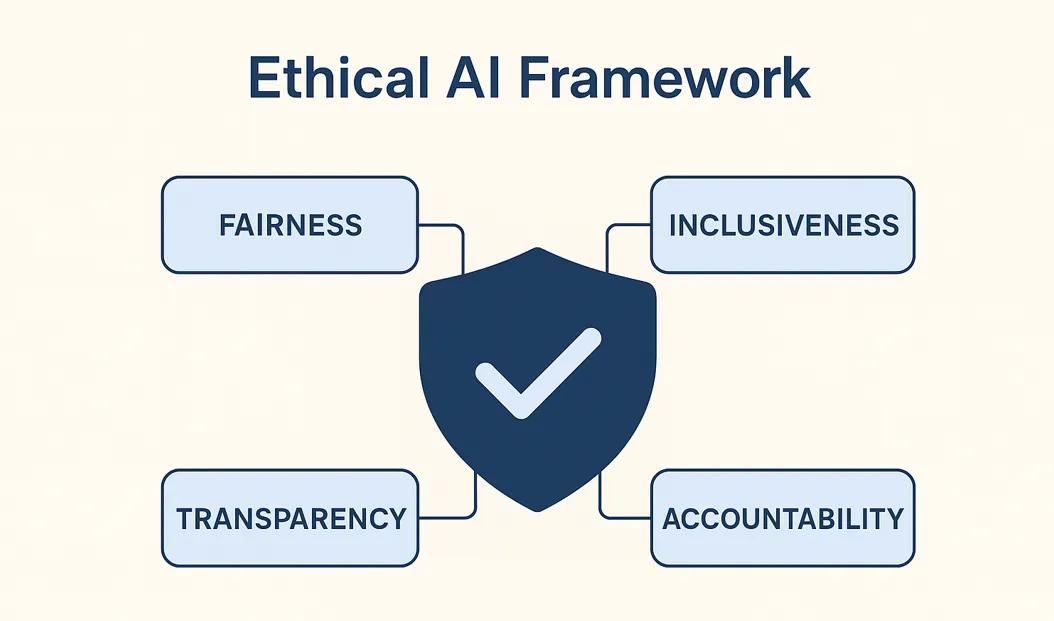
Fairness.
We must ensure that AI programs treat all employees fairly and do not affect similarly situated employees or employee groups in different ways. HR experts should be directly involved in the design and selection process and all deployment decisions. Training should precede the deployment of any AI system.Inclusiveness.
AI technologies should empower everyone. They must be equally accessible and comprehensible to all employees regardless of disabilities, race, gender, orientation, or cultural differences. And we must ensure the biases of the past are not unintentionally built into the future’s AI.Transparency.
People should know where and when AI systems are being used and understand what they do and how they do it. When AI systems are used to (help) make decisions affecting people’s careers and lives, those affected (including those making the decisions) should understand how those decisions are made and exactly how AI influences them.Accountability.
Those who design and deploy AI systems must be accountable for how those systems operate. Clear owners should be identified for all AI instantiations, the processes they support, the results they produce, and the impact of those processes and results on employees. Every part of the organization should receive training to help them understand how AI is used, with updates provided as use increases or changes.Privacy.
AI technologies should respect privacy. We cannot expect employees to share data about themselves or allow it to be gathered unless they are certain their privacy is protected. Anyone with access to this data or the AI systems that collect it should be trained in data privacy.Security.
AI systems should be secure. We must balance the real value of the information we’d like to have with our confidence in our ability to protect it. The TD function will naturally have access to significant amounts of data that we must keep safe. We must adopt the mindset that there is no trustworthy AI. Critical issues are where we create access points to the data, the “hackability” of our systems, and the people we assign to operate those systems. Data protection is an essential part of promoting AI ethics and ensuring trust in our organizations.Reliability.
AI systems should perform reliably and safely. Education concerning AI must demonstrate that systems are designed to operate within a clear set of parameters and that we can verify they are behaving as intended under actual operating conditions. Only people can see the blind spots and biases in AI systems, so they must be taught how to spot and correct any unintended behaviors that may surface.
TD’s Critical Role in AI Ethics
AI tools will require much of the talent development function. In addition to the training noted earlier, everyone in the organization will need training in prompting. Our organizations will need people trained to evaluate the quality and suitability of the data and models used to train and operate AI. When AI systems are used to make consequential decisions about employees, we’ll need training to adequately explain how they operate.
We must help create a widely shared understanding of when and how an AI system should seek human input during critical situations and build a robust feedback mechanism that all employees understand so they can easily report performance issues they encounter.
We already train in cybersecurity and threat awareness, but it must now encompass the risks peculiar to the use of AI. If we truly want to manage this transformation and make AI serve us, it must be implemented based on a deep concern for its human impact.
The TD function should actively share best practices for the design and development of AI systems and implementation practices that share predictable and reliable interoperation with employees. The talent function is uniquely positioned to optimize AI’s impact on the organizations we serve. We can lead the organization in ensuring that our use of this technology meets the highest ethical standards.
FAQS
Where can I learn more about the ethical considerations of AI, data protection, and AI governance?
ATD offers many resources for the ethical use of AI that will help L&D use the technology responsibly while maintaining the human touch. Get started with the Applying AI in Learning & Development Certificate or this course on AI for Instructional Design.
What research is there around AI technology and its role in learning and development?
While AI systems are constantly updating, there are several whitepapers and research reports that provide insights into AI development within the workplace. This AI in learning research report examines the future of AI technologies in work while this report focuses on content creation and transforming workflows within instructional design. We also recommend checking out this report on AI literacy.
How can I ensure the AI tools I am using aren’t raising any ethical concerns?
Whether you are using a company-approved AI system, experimenting with a new program, or building your own AI machine, you must be responsible for AI ethical considerations every step of the process. AI expert Margie Meacham explains that the best way to promote AI ethics is to follow guidelines even when no one is monitoring.
What skills will I need to maintain in the age of AI?
Human oversight is critical when using AI. Skills that can help you track bias across AI models, fact-check AI-generated content, and maintain human dignity within the workplace are all necessary as AI technologies expand. L&D professionals should be skilled in critical thinking, creativity, and emotional intelligence. Check out this blog to learn more about which soft skills will matter most in the next few years.
Why is AI ethics important?
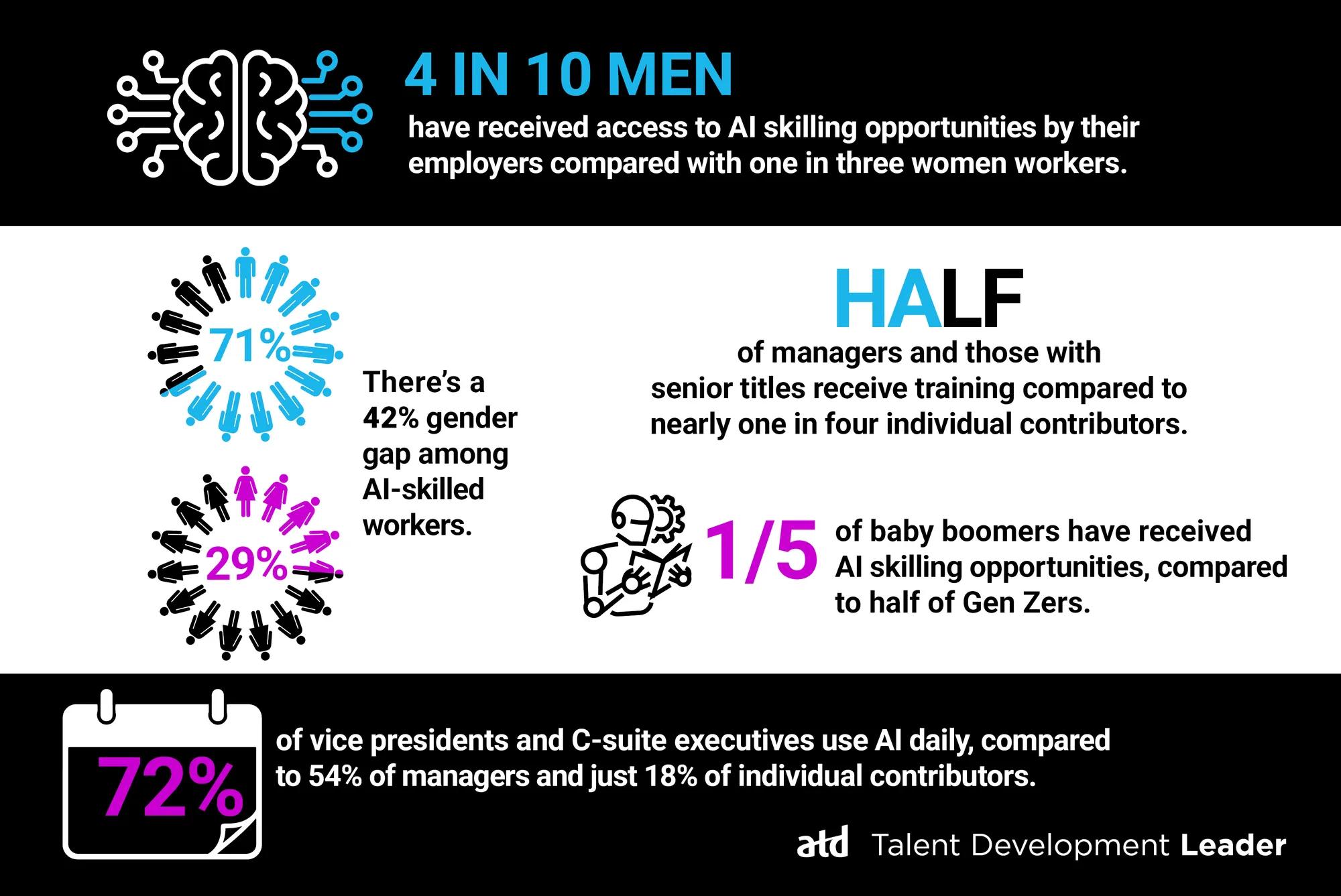
Like any new technology, artificial intelligence raises concerns about copyright, data protection, content quality, environmental impact, and fair use. There is also a growing AI skills gap that talent development is responsible for addressing. For more information, check out this article on the growing digital divide.
Recommended Resources for Ethical Use of AI
Applying AI in Learning and Development: From Platforms to Performance by Josh Cavalier
AI and performance expert Josh Cavalier shares his in-depth knowledge and skills to help L&D professionals master learning experience design by using generative AI in their employee learning and development efforts. More than just a technical manual on generative AI or a collection of best prompt practices, this book explores how AI is reshaping jobs, skill development, and human performance. Josh provides his L&D AI ecosystem framework as a practical road map for integrating AI into your day-to-day work and your organization.
Discover how to seamlessly incorporate AI into your existing L&D processes and broader L&D ecosystem, optimizing workflows and driving measurable results. Explore how AI-enabled L&D platforms can facilitate personalized learning paths, automated performance support, and real-time skills gap analysis. Learn how to craft effective prompts for learning design and use chatbots and AI assistants for help in the moment of need. And importantly, dive deep into the ethical considerations, from maintaining data privacy and security to mitigating bias in AI-powered learning solutions.
No matter how advanced artificial intelligence becomes, L&D professionals must remain focused on performance—of human beings and now machines. Whether you’re a seasoned professional or just starting your AI journey, this book is your essential resource to unleash the power of AI in L&D.
“Amplify Leadership Development With AI Coaching,” TD at Work, by Lindsay Bernhagen and Al Dea
In this issue of TD at Work, Lindsay Bernhagen and Al Dea explain how artificial-intelligence coaching can strengthen leadership development by giving more people more opportunities to reflect, experiment, and grow in the flow of work. You’ll learn:
What AI coaching is and how it differs from traditional coaching approaches
What it means for leadership development
What to look for in a high-quality AI coaching solution
How to implement the technology successfully in your organization
The Tools & Resources in this issue include a worksheet (Ready to Launch AI Coaching?) and a checklist (Choose the Right AI Coaching Partner).
ATD Demo Day: Augment L&D With AI
When: Monday, June 22, 2026
What: This free, half-day event offers you the opportunity to see live demos from five leading learning tech solutions. Each 30-minute demo allows you to see the solution in action, ask questions, and request additional information. Selecting new technologies for your organization is a tough decision and a big investment. Let ATD Demo Day help you learn about the benefits of a variety of options at once.
View Courses Recommended for You